

Department of Community and Behavioral Health
Education Programs
Bachelor of Science in Public Health
Focuses on addiction science, including the fundamentals of behavioral health, the theoretical basis of substance use disorder, the complex interactions between physical and mental health, and the behavioral antecedents and correlates of chronic health conditions.
Medical Ethics
The Certificate in Medical Ethics is designed to prepare medical clinicians and ethics committee members to perform competent clinical ethics case consultation in a hospital, long-term care, or clinic setting.
Bioethics Lab
Helps promote bioethics to medical students, faculty, and healthcare providers in furtherance of WSU’s land-grant mission.
Research
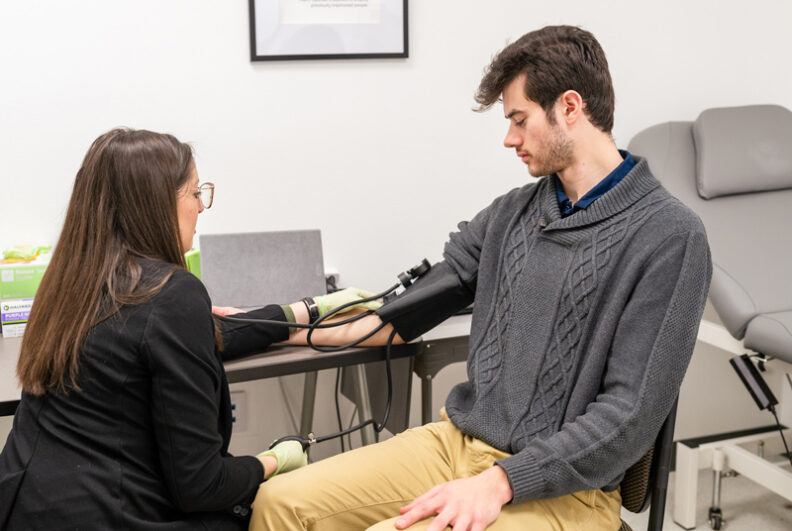
Leading community-driven research that creates healthier futures through innovation in addiction, mental health, perinatal substance use and maternal-infant health, health policy, community health, contingency management, and bioethics.
In the News

MD Students Co-Author Publication on Cognitive Decline, Type 1 Diabetes
Several medical students at the Elson S. Floyd College of Medicine contributed to newly published research examining factors that predict cognitive decline in older adults with type 1 diabetes.

Faculty and Staff Excellence Celebrated at Annual Awards Ceremony
Elson S. Floyd College of Medicine faculty and staff gathered in Spokane this month to recognize those who epitomize excellence in pursuit of the college’s mission and vision of a healthier Washington and beyond.

American Psychological Association Highlights Contingency Management Research
Michael McDonell, PhD, a professor in the Elson S. Floyd College of Medicine’s Department of Community and Behavioral Health and director of the PRISM Collaborative, was recently featured on an episode of the American Psychological Association’s podcast Speaking of Psychology.
Awards & Achievements
John Roll
2022 Sahlin Eminent Faculty Award Honoree
Oladunni Oluwoye
2026 Mid-Career Faculty Award
Kimberly Cufley
2026 President’s Employee Excellence Award
What We Do
- We improve health outcomes by conducting community-informed research and developing evidence-based policies and practices.
- We develop foundational knowledge and critical thinking by providing rigorous multidisciplinary training at the graduate, professional, and postgraduate levels.
- We practice responsive community engagement and advocacy through service activities at the local, regional, national, and international levels.
Why We Do It
- We aspire to create a more inclusive and just health system through interventions, programs, and policies that reduce health disparities, reject stigma, and improve community health.
- We are reflexive and accountable to the communities we serve.
- By our policies, practices, and behavior, we create and maintain a diverse, inclusive, and equitable department committed to social justice in our university and broader communities.
- We recognize that the differences in our backgrounds and personal experiences help us better understand and address the complex health problems we study. We celebrate the diversity of our faculty, staff, and students.