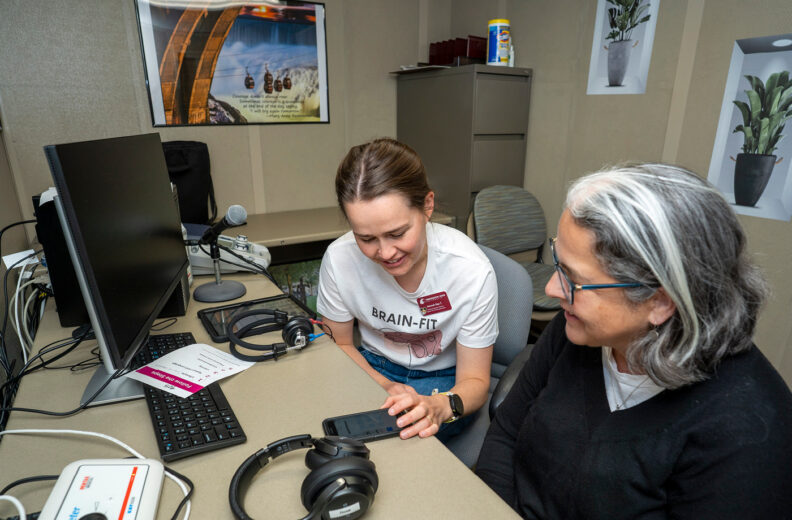
For Department of Speech and Hearing Sciences Assistant Professor Amy Kemp, PhD, CCC-SLP, distinctions between the classroom, clinic, and community dissolve in the pursuit of better brain health.
Kemp’s BRAIN FIT initiative—short for Building a Repository for Aging, Interventions, and Neurocognitive Function: Factors that Impact Cognitive Trajectories—is fulfilling a tripart mission to advance the science of cognitive decline, bring comprehensive screenings to rural communities, and equip the next generation to advance access to care for all.
“My aim is to bridge research and clinical practice,” said Kemp, an early career researcher who leads the Accelerating Research in Cognitive Communication Health (ARCCH) Lab at the WSU Elson S. Floyd College of Medicine. “The goal of the lab is to directly translate research into what clinicians and the communities they serve need.”
As part of the new initiative, this summer an interprofessional team led by Kemp offered free health screenings at community centers across Washington and northern Idaho for a range of modifiable risk factors associated with Alzheimer’s disease and related dementias—including cardiovascular health, social-emotional well-being, nutrition, sleep, and other lifestyle factors. Participants received personalized education and resources designed to support and improve their long-term brain health.
Kemp hopes the mobile clinic will raise awareness of the ways individuals can lower their risk of dementia, particularly through lesser-known factors such as protecting one’s hearing.
“Of everything you can do to protect your brain as you age, your hearing plays a huge role and is one of the easiest things that can be habilitated,” Kemp said.
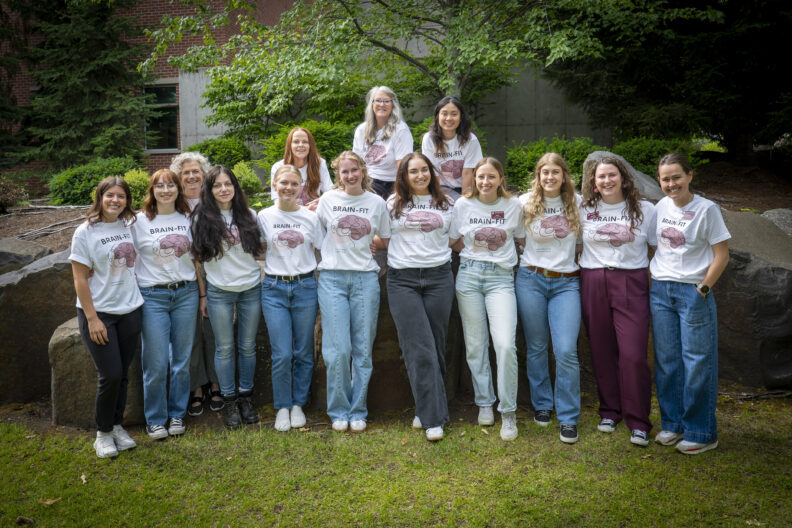
Students from the WSU College of Medicine Department of Speech and Hearing Sciences (SHS) and the WSU College of Nursing gained hands-on clinical experience as part of the clinic team. Nursing students Elizabeth Brazington, Hayley Devine, Kaylynn Koon, and Vy Pham conducted screenings, supported by a grant from the Granger Cobb Institute of Senior Living. The students were supervised by Sue McFadden, MN, ARNP, Kay Olson, MN, RN, and Robyn Maehren, BSN, CEN.
SHS undergraduate students Solveig Anderson and Hailey Lengenfelder and graduate students Callie Barokas, Hannah Tjelle, Janelle Wilson, and Madison Baller assisted with the screenings and preparing resource handouts. They will also contribute to BRAIN FIT research.
Enhancing Health Outcomes and Empowering Student Inquiry
Data from the screenings and regular follow-ups with participants will be collected in a repository, allowing researchers to analyze which factors and self-managed interventions best predict the trajectory of cognitive decline over time.
Students will assist with Kemp’s study of cognitive health trajectories and will have the opportunity to answer their research questions related to brain health.
Master’s student Madison Baller is particularly interested in how mental health and adverse childhood experiences impact cognitive health later in life. Depression and other indicators of emotional well-being are known risk factors for dementia, according to previous research.
“So many Americans experience mental health difficulties and may not realize how it is impacting their cognitive functioning,” she said.
Janelle Wilson, also a second-year student in the Master of Science in Speech and Hearing Sciences program, is passionate about investigating connections between vision and hearing loss and cognitive decline, which could have important implications for clinical practice.
“This research may allow practitioners to better predict cognitive decline in older adults while providing early, effective, and non-invasive intervention,” Wilson said. “It could also empower patients to use effective self-management strategies, leading to improved cognitive outcomes and quality of life.”
Wilson also hopes the low- or no-cost resources she helped collect in clinic handouts prove useful, including the WSU Aging Assistive Technology program in Pullman and the Union Gospel Mission’s free eye-care events in Spokane.
Master’s student Hannah Tjelle is most interested in studying resource use and behavior change after clinic visits—particularly whether individuals with mild cognitive impairment need ongoing support to sustain changes. While she plans to pursue a career in clinical practice instead of research, she notes that insights from the project will be valuable for her own practice.
“I will certainly carry these clinical experiences and research findings with me my whole career as a speech language pathologist,” Tjelle said.
By bringing together leading-edge research, hands-on student training, and direct community service, the BRAIN FIT initiative is not only advancing our understanding of cognitive health—it’s transforming lives, offering resources and a roadmap for healthier aging.