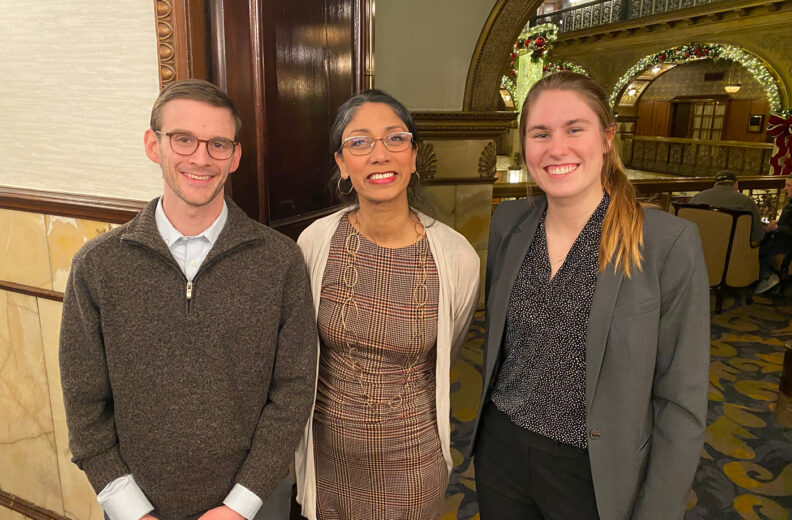
Rural clinical experiences in medical school may help recruit surgeons to medically underserved communities, according to student-led research published in The American Surgeon and conducted at the Washington State University Elson S. Floyd College of Medicine.
Amid an ongoing physician shortage, WSU’s MD program requires rural and underserved clinical experiences across Washington, allowing students to learn from community surgeons and offering distinct training experiences compared to urban hospitals.
To explore how these experiences shape student preparedness and career decisions, WSU medical students Katherine Slack (Class of 2026) and Veronica Harmon (Class of 2027) interviewed seven WSU MD graduates who are now completing residency training to become surgeons.
“Our findings were not surprising, but they were gratifying. Every participant shared positive experiences from their rural surgery rotations in our qualitative interviews,” Slack said. “Even though not all participants plan to return to practice in rural or frontier communities, common themes among their responses included being able to play an active role even as a student, feeling a strong sense of responsibility, appreciating the close-knit community, developing their creativity and adaptability, and encouraging their professional development.”
Slack presented the research at the 2025 North American Rural Surgical Society Annual Meeting in Denver, Colorado, and at a WSU symposium. Harmon also presented the study at the 2025 Washington/Oregon Chapter Annual Meeting of the American College of Surgeons in Chelan, Washington.
They hope their results spur other medical schools to incorporate rural training experiences into their curricula to better address physician shortages in underserved communities.
“This research highlights how medical schools can implement rural exposure in students’ rotations or modify their curriculum to better prepare students to serve medically underserved communities,” Slack said. “Our participants’ experiences and career aspirations suggest that early exposure to these communities can impact medical students’ career trajectories and inspire graduates to pursue opportunities in areas where providers are most needed.”
Co-authors on the study included WSU College of Medicine faculty Anne Grossman, MD, Jaime Bowman, MD, and Anjali Kumar, MD, MPH.
The team plans to continue the research by following graduates as they continue their residency training and ultimately choose where to practice as fully trained physicians. Slack will soon join them on the path to filling a critical need for more surgeons, locally and nationwide, when she begins her general surgery residency at Virginia Mason Franciscan Health in Seattle this summer.
The full text of the study is available through the WSU Libraries.