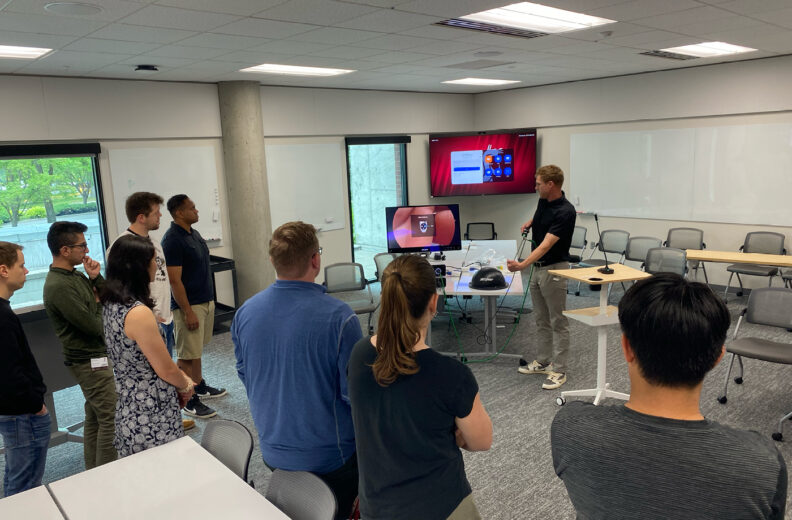
Each fall, medical students at the WSU Elson S. Floyd College of Medicine transition from the classroom to clinical settings across Washington to complete their degree with hands-on training at community clinics and hospitals. The MD program’s Transition to Clerkship course uses simulation-based training to prepare students for real-world care, helping them enter clinical settings with confidence.
This year’s surgical skills session included a new addition thanks to the global medical technology company Stryker—the loan of a Stryker laparoscopic camera, a high-definition camera system that enables minimally invasive surgery.
“Thanks to Stryker’s generous support, our students experienced a highly realistic, hands-on introduction to the surgical clinical environment—an essential step in their transition from classroom-based learning to clinical practice,” said Vice Chair for Surgery Anjali Kumar, MD, MPH, FACS, FASCRS. “This experience helped ensure that our students are better prepared, more confident, and more capable as they enter the clinical phase of their training.”
During the multi-day session earlier this year, rising third-year medical students practiced a variety of surgical skills, from scrubbing in to basic surgical procedures. A half-day workshop on laparoscopic techniques began with traditional box trainers, devices that allow learners to practice essential skills like dexterity and hand-eye coordination in 2D. The addition of a Stryker camera system allowed students to expand their practice to a 3D view.
“The high-fidelity simulation environment greatly enhances the realism and educational value of the experience,” Dr. Kumar explained. “This allows students to gain first-hand experience in a classroom setting with the tools and techniques they will encounter during their surgical clerkships.”
The workshop highlights the value of industry partnerships in medical education. By integrating cutting-edge technology into hands-on training, the initiative provided students with a more realistic and immersive experience, better preparing them for the complexities of modern surgical practice.