Spokane Campus

History

Celebrating 10 Years of Homegrown Health Care
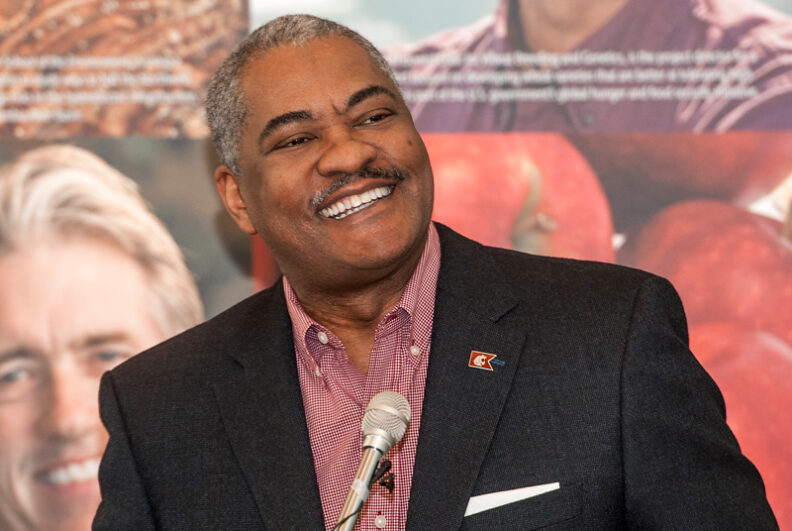
Elson S Floyd

How the Vision of WSU’s Late President Elson S. Floyd Became a Reality

The creation of the Elson S. Floyd College of Medicine, Washington’s first community-based medical school, reflects the visionary leadership of its founding figures and the culmination of years of committed efforts from the college community and our partners. Learn more about Dr. Floyd’s vision and explore the timeline of our milestones below to see where our story started.

“Washington State University has worked to serve the needs of our state, nation, and world for 125 years, and successful development of a medical school is one more way for us to improve the health and well-being of Washingtonians.”

—Washington State University President Elson S. Floyd, PhD

Dr. Floyd’s Transformative Vision for Medical Education in Washington

Washington State University’s 10th president and a nationally respected voice for affordable higher education envisioned a medical college that would achieve the following:

Expand Health Care Access

Create solutions to the problem of access to quality health care in rural and urban underserved areas of Washington state.

Train Physicians Who Will Serve Their Own Communities

Recruit students from rural and underserved urban communities to establish a pathway to medical school and back to their communities.

Be Statewide and Community-Based

Medical students complete their academic and clinical work at one or more of the WSU campuses to establish relationships in and near underserved areas.

Provide an Interprofessional Education

Give students from different health disciplines opportunities to learn in a collaborative environment, building skills needed to lead health care teams of the future.

Foster Economic Development

Expand the WSU research enterprise to spur technology transfer.

Advance Discovery

Support research that has a global impact on the science of human health and wellness.

Timeline

2008

In his State of the University address, WSU President Elson S. Floyd outlines his vision for a comprehensive network of health sciences services and programs at WSU Spokane that would transform medical education and expand health care access for Washington communities.

2010

The Board of Regents officially designates WSU Spokane as the university’s health sciences campus, the first step in creating an interprofessional hub for medical education and research in eastern Washington.

2011

The Department of Speech and Hearing Sciences becomes part of the Division of Health Sciences and consolidates its academic programs in Spokane, laying the first stone in the foundation of the future College of Medicine.

2013

A new $80 million Pharmaceutical and Biomedical Sciences Building opens on the Spokane campus, providing 125,000 square feet for interprofessional education, clinical simulation, and medical research. The College of Pharmacy and Pharmaceutical Sciences completes its move from Pullman to Spokane.

2014

The WSU Board of Regents concludes that Washington State University is well positioned to create its own accredited medical school. Leaders at the University of Washington and Washington State University later announce an agreement to dissolve their WWAMI partnership and independently pursue their respective proposals to meet the state’s growing need for more physicians.

2015

With bipartisan support in the state legislature, on April 1, 2015, Washington Governor Jay Inslee signs into law a bill that gives WSU the authority to create an independently accredited medical school in Spokane. After Elson S. Floyd dies of complications from colon cancer later that year, the WSU Board of Regents votes to rename the College of Medical Sciences in his honor. Dr. John Tomkowiak, a veteran of community-based medical education, joins the college as our inaugural dean.

2016

Under the leadership of Dr. Tomkowiak, the Elson S. Floyd College of Medicine achieves preliminary accreditation and begins hiring faculty and administrative and operating staff.

2017

The college welcomes our inaugural class of 60 medical students. The departments of Nutrition and Exercise Physiology and Speech and Hearing Sciences are incorporated into the college, creating an interprofessional learning environment of future physicians, registered dietitians, speech language pathologists, and other health care professionals.

2018

Opportunities in nutrition and exercise research expand in the college with the launch of two new advanced degree programs: a Master of Science Coordinated Program in Dietetics, Nutrition and Exercise Physiology and a PhD in Nutrition and Exercise Physiology.

2019

Our inaugural class of medical students relocate to regional medical campuses across the state to begin hands-on training in Washington hospitals and clinics. The college welcomes 80 new medical students in its largest and most diverse class to date, setting the standard for future cohorts of Coug Docs. Affiliate nonprofit Range Community Clinic unveils its first William A. Crosetto Mobile Health Care Unit to bring health care to Washington’s rural and underserved areas. The college is named an Apple Distinguished School in recognition of its digital curriculum and innovative approach to medical education.

2020

The college launches a Certificate in Medical Ethics program and three new pathway programs to support future physicians who are underrepresented in medicine: Reimagine Indians into Medicine (RISE), RISE Wy’east Pathway, and the WSU Honors College Pathway.

2021

Following our first Match Day, we celebrate the graduation of our first Coug doctors alongside their peers in NEP and SHS. The college launches its first residency program, the Internal Medicine Residency Program–Everett, expanding postgraduate training opportunities and bringing more physicians to practice in Washington. The MD program receives full accreditation.

2022

The college launches the Family Medicine Residency Program–Pullman in partnership with Pullman Regional Hospital to train more primary care physicians in rural areas. Founding Dean Dr. John Tomkowiak steps down and is succeeded by interim dean Dr. James Record, an experienced medical education leader and head of the college’s graduate medical education, continuing medical education, and partnership efforts.

2023

The Department of Speech and Hearing Sciences opens the Autism and Neurodevelopmental Program and its onsite clinic, the first of its kind in eastern Washington. The college launches the Healthcare Administration and Leadership program in partnership with the WSU Carson College of Business and expands opportunities for pediatricians to train in eastern Washington with the launch of the Pediatric Residency Program–Spokane, a partnership with Providence Sacred Heart Children’s Hospital. WSU Spokane celebrates the newly renovated Medicine Building, which provides 113,000 square feet for upgraded flexible learning spaces, a student collaboration hub, testing center, and more. Dr. James Record is appointed dean of the college.

2024

As our inaugural class of medical students begin completing their residency training, most decide to practice medicine in Washington, with some rejoining the college as clinical faculty. We celebrate the college’s first graduating class of residents, now independently practicing physicians, and announce the Partnership for Health Innovation with Pacific Lutheran University and MultiCare. The college joins a national program to support Indigenous-led public health research and is honored with a HEED Award, a national recognition of our ongoing commitment to academic excellence and belonging in health care. The Virtual Clinical Center launches a mobile simulation unit to bring simulation-based training to learners and community providers across the state.

2025

The college marks its 10th anniversary, celebrating a decade of homegrown health care and more than 1,000 health professions graduates in 10 years. We launch our first fellowship program, the Critical Care Medicine Fellowship–Everett, to train more specialists in-state, and a new pathway program to support enrolled Tribal members who aspire to become physicians. WSU is selected to receive the Washington State Medical Association’s first full-ride medical student scholarship. The Department of Speech and Hearing Sciences celebrates 100 years of history and new opportunities for clinical initiatives under the College of Medicine. A new joint degree program and research collaboration between the Department of Nutrition and Exercise Physiology and College of Agricultural, Human, and Natural Resource Sciences addresses the intersection of agriculture, nutrition, and human health. Our Continuing Medical Education program receives full accreditation.