Researchers from the Department of Speech and Hearing Sciences (SHS) at the WSU Elson S. Floyd College of Medicine have been recognized with a 2025 Editor’s Award from the Journal of Speech, Language, and Hearing Research (JSLHR).
Their article, “Virtual Post-Intervention Speech and Language Assessment of Toddler and Preschool Participants in Babble Boot Camp,” was selected by the journal’s editors as one of the most impactful and high-quality publications published last year. The award will be formally presented at the American Speech-Language-Hearing Association (ASHA) Convention in Washington, D.C., in November.
The article discusses how the researchers adapted during the COVID-19 pandemic to continue their evaluation of Babble Boot Camp, an innovative early intervention method they developed to prevent or minimize speech and language disorders in at-risk babies and toddlers.
“All academic faculty have their own story about COVID-interrupted research, and this Editor’s Award paper encompasses my story,” said lead author Nancy Potter, PhD, CCC-SLP, professor emerita.
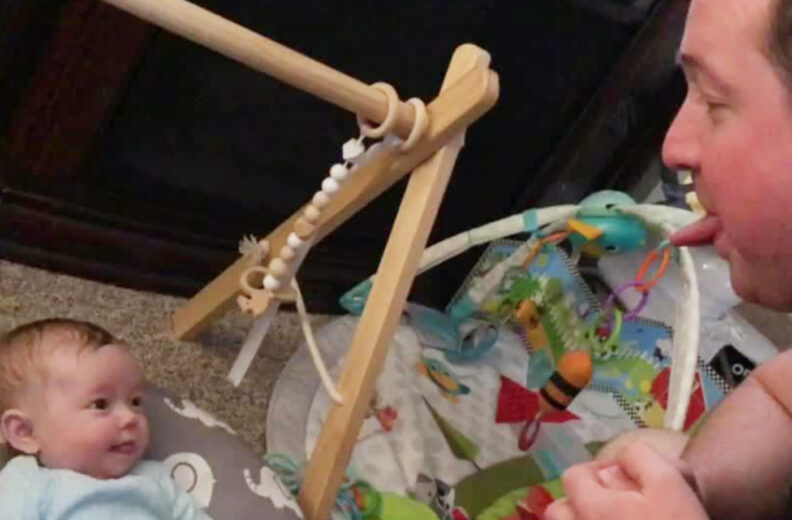
Potter first developed Babble Boot Camp with collaborators at WSU and Arizona State University. The method is unique for intervening proactively before children show signs of a delay—when they “babble” but don’t yet talk.
“Babble Boot Camp is the first known study to examine the outcomes of starting speech therapy with babies,” Potter said.
The researchers tested the intervention in children with classic galactosemia, a rare genetic condition with a high risk for developing speech and language disorders. In a clinical trial funded by the National Institutes of Health, speech-language pathologists coached parents through weekly virtual sessions on activities to implement with their child from birth to age 24 months, capitalizing on an early window of brain development.
The researchers planned to follow up with in-person assessments of speech and language outcomes starting at age 2, but the pandemic necessitated a pivot to virtual testing.
“The first 2-year-old I attempted to assess repeatedly climbed up onto the desk and sat on the keyboard. The second child made his selections by licking the screen,” Potter said.
She decided to begin assessments at 2.5 years instead, and the team was able to successfully conduct virtual assessments in nearly all 75 children who participated in the trial. The results showed an impressive increase in babble volume and complexity as well as a reduction of speech and language challenges in children who received the intervention.
“At age 2.5 years, over 80% of the children with classic galactosemia had speech and language development within normal limits,” Potter said.
Babble Boot Camp has promising applications for other children at risk for speech and language disorders. A pilot study recently showed benefits for children with Down syndrome, and further research is planned for premature babies and other at-risk populations.
The researchers also developed an accredited online course to train speech-language pathologists in the Babble Boot Camp method, making it accessible to providers and caregivers across the country. All proceeds from the course will support ongoing research.
For Potter, the success of Babble Boot Camp represents a full circle moment in an extensive career dedicated to improving childhood speech and language outcomes.
“Fifty years ago, I began my career as a grant-funded speech-language pathologist examining if intervening before kindergarten could improve outcomes in minimally verbal children,” she said. “I am closing my career examining if intervening during infancy before a speech or language disorder develops improves long-term outcomes. It does. Clearly the adage ‘An ounce of prevention is worth a pound of cure’ applies also to speech and language development.”
In addition to Potter, the Editor’s Award recognizes study co-authors Mark VanDam, PhD, SHS professor; Lauren Thompson, PhD, CCC-SLP, SHS associate professor; and SHS alumni Victoria Heinlen, MS, CCC-SLP and Claire Schrock, MS, CF-SLP, as well as collaborators at Arizona State University and the University of Minnesota.
The WSU College of Medicine congratulates the awardees on this outstanding achievement and their continued contributions to advancing pediatric speech and language research.