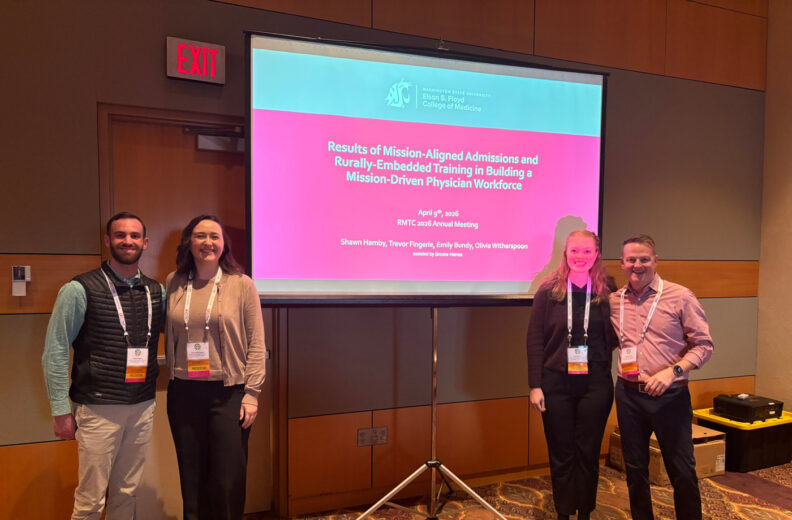
Students and faculty from the Elson S. Floyd College of Medicine presented at the 2026 Rural Medical Training Collaborative (RTMC) Annual Meeting in Duluth, Minnesota, last month. Their presentations highlighted the college’s work to improve access to care and advance health outcomes in rural communities.
Building a Mission-Driven Physician Workforce
First- and second-year medical students Shawn Hamby, Trevor Fingerle, Emily Bundy, and Olivia Witherspoon, assisted by Brooke Haines, presented “Results of Mission-Aligned Admissions and Rurally-Embedded Training in Building a Mission-Driven Physician Workforce” to an excited audience.
The presentation highlighted how strategic components of WSU’s MD program—from recruiting students with strong ties to Washington and a commitment to service, to providing longitudinal rural and underserved training experiences—work together to address physician shortages.
The presentation underscored how WSU’s intentional approach to admissions and training is not only aligned with its mission, but is successfully producing a physician workforce equipped to meet the state’s most pressing health needs.
Deepening Community Service and Connection
A faculty team presented “Deepening Community Service and Connection,” including Vice Chair for Family Medicine Jaime Bowman, MD, FAAFP; Assistant Professor Anne Grossman, MD; and Clinical and Rural Partnerships Administrator Jade Stellmon. They were assisted by Learner Support Coach and Associate Professor PL Bandy, MD; Acting Vancouver Regional Dean Jamie Kennel, PhD, MAS; faculty Judi Marcin, MD, MFA; and Tri-Cities Regional Dean Farion Williams, MD.
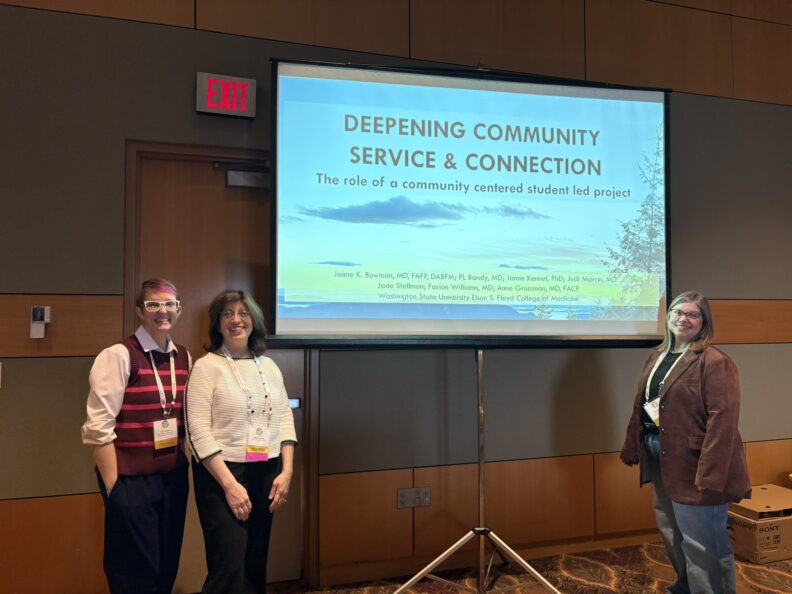
Community-centered, student-led projects deepen connections between medical education and the communities being served. Grounded in the college’s mission to support rural and underserved populations, the presentation highlighted how a required fourth-year rotation pairs immersive clinical training with a project designed around real community-identified needs.
This approach creates a continuous feedback loop—helping students build practical skills, a sense of belonging, and adaptability, while also delivering meaningful, tangible impact for community partners.
The session emphasized that when learners are embedded in communities and given responsibility to contribute, both educational outcomes and community benefit are strengthened, demonstrating the value of intentionally designing training experiences that are not only pace-based but purpose-driven.
Strategies for Residency News Coverage
Clinical and Rural Partnerships Administrator Jade Stellmon also presented “The Rural Residency Press Kit: Strategies for Strong Local News Coverage.”
Framed around the realities of today’s shrinking and resource-constrained local news landscape, the session highlighted how programs can move from passive communication to intentional media engagement. By understanding how small-market newsrooms operate and building relationships with local reporters, residency programs can better shape accurate, meaningful stories about their work.
The presentation emphasized practical tools that help programs increase visibility, build trust, and ultimately strengthen community support in the regions they serve.
Family Medicine Residency Program Director Stephen Hall, MD, and Associate Program Director Molly Thompson, MD, also presented at the conference about supporting trainees in a rural setting.
About the Rural Medical Training Collaborative
The RTMC is a cooperative of undergraduate and graduate medical programs that helps sustain health professions in rural communities through education, training, networking, mutual encouragement, and peer learning. Learn more at the RTMC website.
This article includes contributions from Jade Stellmon.