Investigators from the Institute for Research and Education to Advance Community Health (IREACH) have received a $2.7 million grant from the National Institutes of Health (NIH) to study how to effectively communicate with Indigenous communities about research on Alzheimer’s disease and related dementias.
The Communicating Health Advancements from Native GEnomics (CHANGE) Research project will develop and test culturally tailored materials to help ensure Indigenous communities are represented in studies that advance early diagnosis and new treatments.
“Building partnerships with Indigenous communities in genetic and biomarker research requires an understanding of the historical, cultural, and political contexts that shape research participation,” said Principal Investigator Amanda Boyd, PhD, a professor in the Elson S. Floyd College of Medicine and executive director of Native American Programs at WSU. “Many Indigenous people are interested in participating in research, but meaningful engagement requires approaches grounded in Tribal governance, cultural respect, and trust.”
Led by Indigenous researchers, the work will be done in partnership with the United Indians of All Tribes Foundation (UIATF) and other American Indian and Alaska Native-serving organizations.
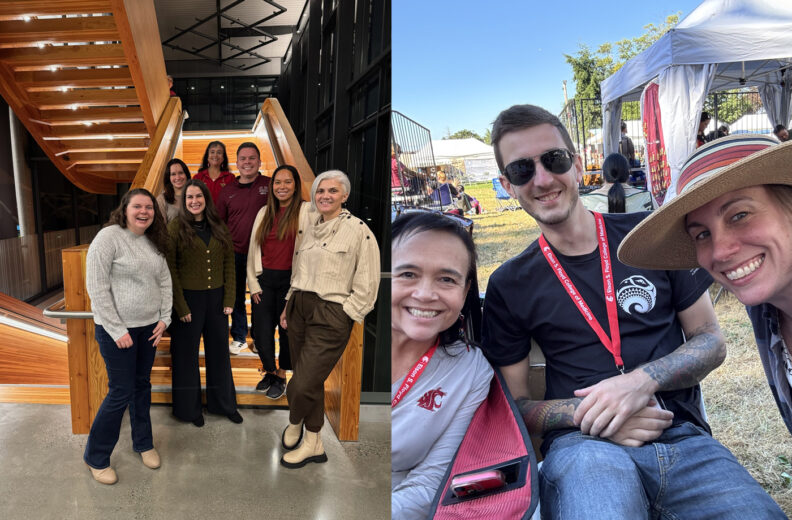
Recruitment for the multi-method project began this summer at the UIATF’s Seafair Indian Days Powwow in Seattle, where researchers administered more than 300 surveys to explore participants’ knowledge and perceptions of biomarker research. The team will also interview American Indian and Alaska Native (AI/AN) adults about barriers and facilitators to participating in biomarker research.
Using insights from the first phase of the project, the researchers will develop culturally tailored materials for recruiting AI/AN individuals in biomarker research on Alzheimer’s disease and related dementias. The team will then test the materials in a pilot study to assess their feasibility for future clinical trials.
In addition to Boyd, the research team includes IREACH Director Denise Dillard, PhD, IREACH faculty Marija Bogic, PhD, Erin Morgan, PhD, Rachel Wilbur, PhD, MHA, and MichaeLynn Kanichy, MPH, and Cole Allick, PhD, MHA (College of Veterinary Medicine Paul G. Allen School for Global Health).
The project is funded by the NIH’s National Institute on Aging through a five-year R01 grant.
Media Contact
Stephanie Engle, WSU Elson S. Floyd College of Medicine Communications and Marketing, 509-368-6937, stephanie.engle@wsu.edu