Halloween may be over, but the fact remains: fear is hard-wired into the human experience.
In a recent article exploring the science of fear, the Spokesman-Review featured Professor Chris Davis, PhD, a faculty member in the WSU Elson S. Floyd College of Medicine’s Department of Translational Medicine and Physiology and the Sleep and Performance Research Center.
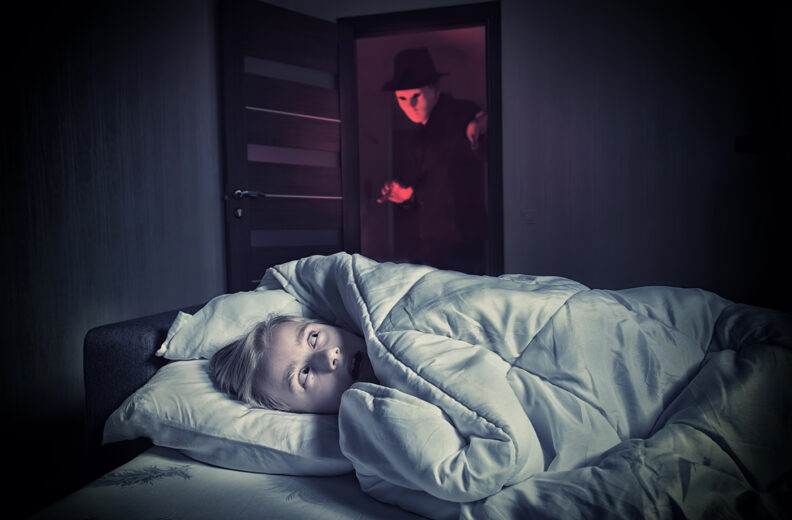
Davis explained that nightmares tend to occur during during rapid eye movement sleep (REM), when the “fear center” in the brain’s limbic system tends to be most active but the more reasonable the frontal lobe is less active.
“The emotion-generating and memory center regions are pretty active, and the logical reasoning areas of our brain kind of go offline,” Davis told the newspaper. “So, essentially, that sets the stage for tense storylike dreams with strong emotions.”
He also discussed growing interest in lucid dreaming as a treatment for nightmares, such as nightmares that occur in PTSD.