Researching Speech and Language Across the Lifespan
The Department of Speech and Hearing Sciences conducts a variety of innovative research programs focusing on speech, language, cognitive communication, and swallowing. Specific populations include individuals with autism spectrum disorders, neurotypical populations, childhood apraxia of speech, stuttering, reading disorders, acquired brain injuries (stroke, TBI, neurodegenerative processes), hearing impairment, and rare diseases. Our innovative research impacts education, healthcare delivery, and policy across the U.S. and abroad.
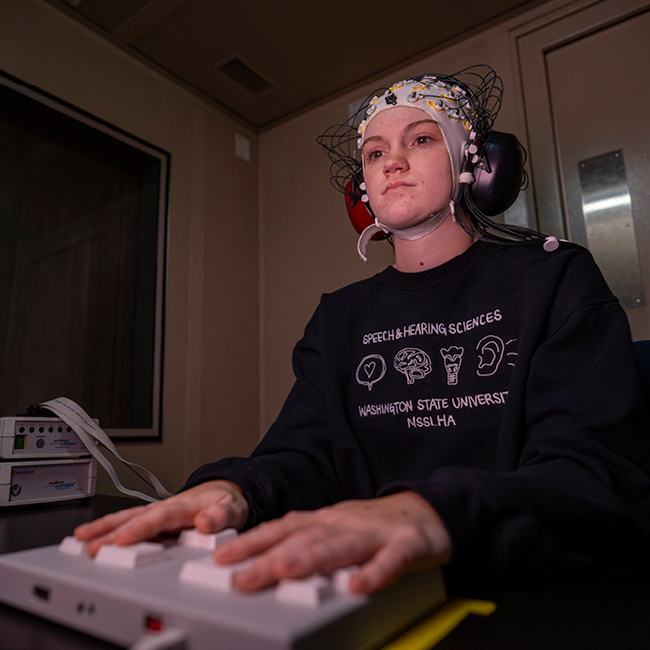
Speech Electrophysiology
Researchers in the Department of Speech and Hearing Sciences (SHS) aim to better understand the physiologic processes involved in stuttering to improve the identification of children at risk of developing a stutter, predict which children will grow out of stuttering, and improve treatment efficacy.
The researchers use EEG, eye tracking, and survey methods to study how the sensory and motor systems interact during speech perception and production. They also explore the neurophysiology of stuttering, a sensorimotor-linked speech disorder, by examining the brain activity of people who stutter and people who do not.
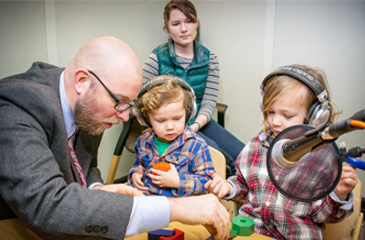
Improving Measurement for Communication Disorders
In the state of Washington as well as nationally, there is a rise in children referred for specialty testing to accurately diagnose and describe the profiles of children with developmental disorders. One of the research efforts of the WSU Department of Speech and Hearing is to examine the utility of screening and diagnostic tools used for very young children at risk for communication disorders including ASD. Working with teams across multiple institutions, SHS faculty are able to conduct thorough evaluations using multiple methods of assessment to optimize the tools used and improve the early identification process for children and families in need.
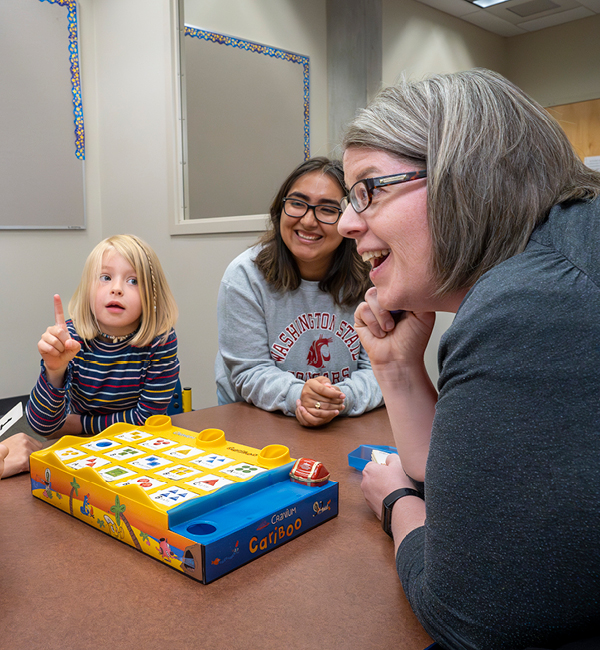
Academic Outcomes in Children with Speech and Language Disorders
Developing language and literacy skills is key to children’s academic success and long-term life outcomes. By studying the relationship between speech and language disorders and reading difficulty in school-age children, they can identify children at risk of reading difficulty and improve practical interventions and outcomes.
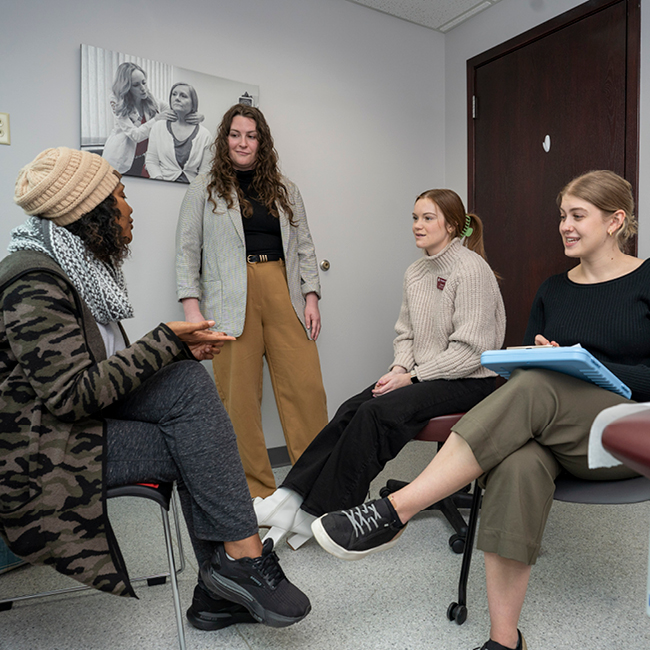
Cognitive Communication Health and Rehabilitation
The researchers are developing novel interventions for assessing and treating cognitive-communication deficits from brain injuries, leveraging implementation science methods and community partnerships to support the adoption of new technologies and best practices in clinical practice.
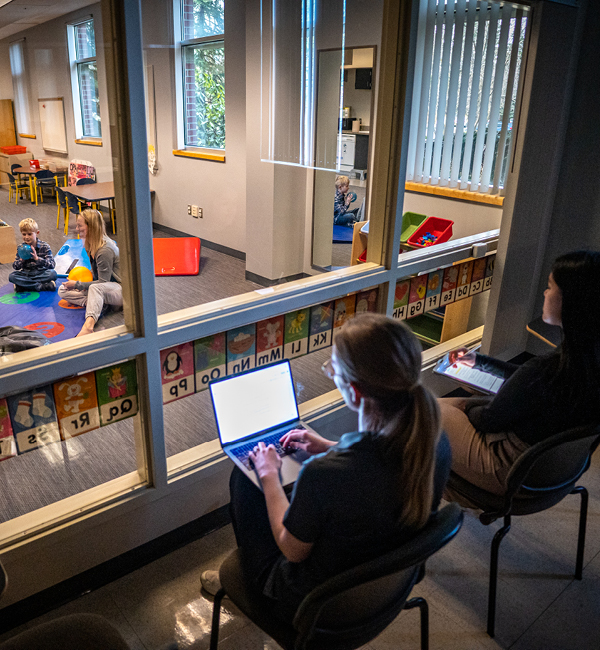
Developmental Trajectories of Risk Factors for Autism Spectrum Disorders (ASD)
Researchers in the WSU Department of Speech and Hearing are committed to the early identification of autism spectrum disorder and helping families receive timely access to appropriate ASD-specific early intervention. One of the challenges in making early diagnosis of ASD in very young children is the substantial change in ASD symptoms and other important developmental areas such as language and cognition in very young children. Working with families over time during the infant and toddler years allows SHS faculty to better track possible risk factors for ASD leading to earlier intervention and improved outcomes.
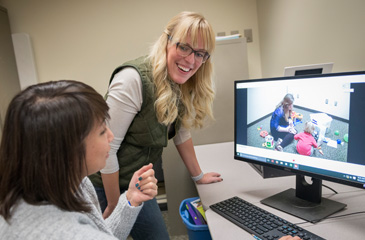
Technology Innovations for Speech & Hearing
Department of Speech and Hearing researchers are monitoring speech and language development in children who are deaf or hard-of-hearing (D/HH), babies at risk for long-term speech and language disorders, adults with neurodegenerative disease, and healthy talkers, using small wearable recorders to capture all day audio recordings. The recordings are analyzed using automatic speech recognition (ASR) and automatic speech processing (ASP) using modern artificial intelligence (AI) and machine learning (ML). Some data are collected into corpora and made publicly available in online repositories.
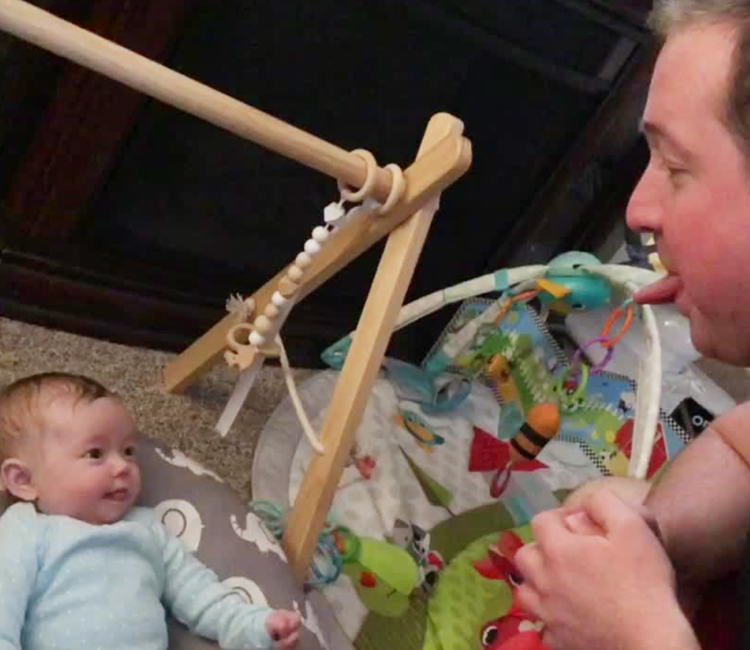
Rare Disease
Several researchers from the Department of Speech and Hearing focus on a rare genetic metabolic disorder, classic galactosemia, which prevents affected individuals from breaking down the sugar in milk and milk products. Left untreated, classic galactosemia is fatal in most patients. When treated with diet restrictions, patients survive but often present with severe speech, language, and motor disorders. Currently we are conducting a study, Babble Boot Camp, starting therapy with infants as young as 8-weeks-old.