Camp Candoo
What We Do
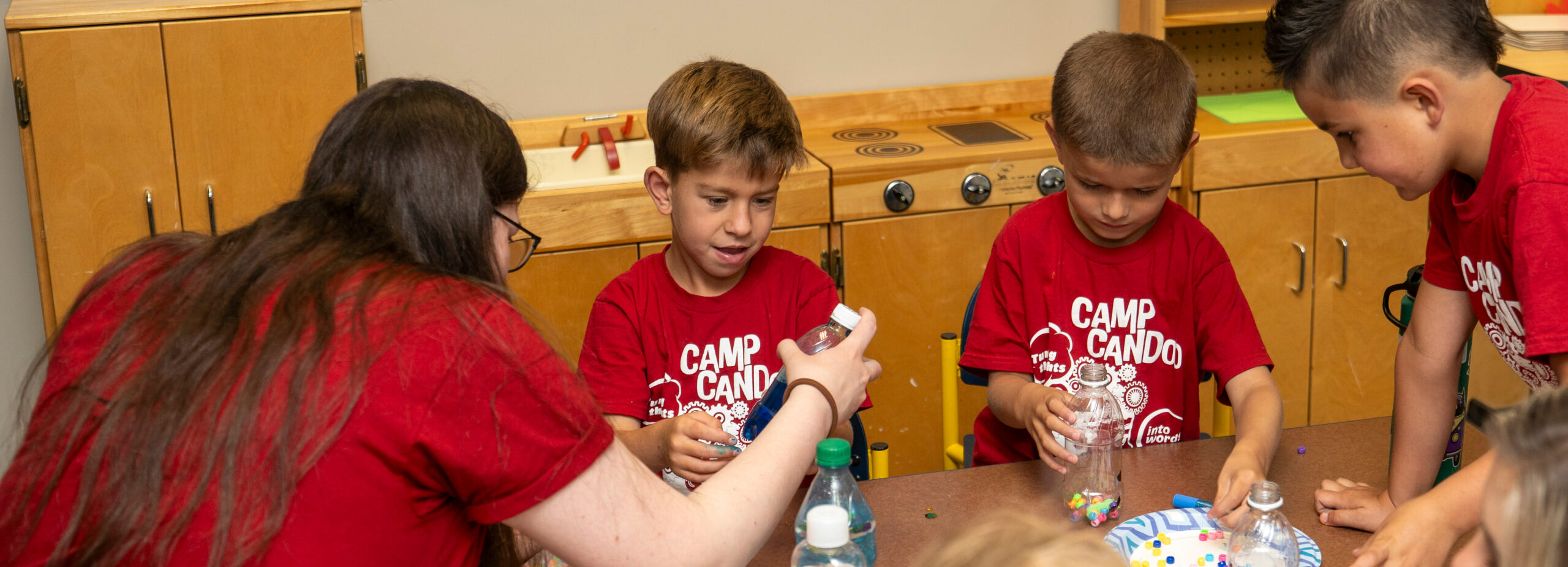
The seven-day camp offers excellent research-based clinical teaching and training led by experts in the Department of Speech and Hearing Sciences in partnership with WSU Health. Therapy will be provided by graduate-level clinicians who are supervised by certified speech-language pathologists who have extensive experience in childhood motor speech disorders, language, and early literacy.
Camp includes an assessment on the first day followed by seven days of individual and group therapy.
- Each camper will receive 60 minutes of individual therapy daily in two separate treatment sessions. Sessions will target specific speech goals for each camper. Therapy will be based on the Dynamic Tactile Temporal Cueing (DTTC)¹ or other evidence based practice therapy approaches best suited for that camper2.
- In small group therapy, campers will have opportunities to practice their speech goals in different settings and work on phonological awareness3 and early reading skills using a multi-sensory approach. One-to-one support will be provided.
- In large group therapy, campers will practice their social communication goals and reinforce sound-letter awareness during snack and activity time. One-to-one support will be provided.
- Three parent education sessions will be held during or after Camp Candoo. Tentative topics may include, but are not limited to, the connection between speech and reading, differential diagnosis of speech disorders, school advocacy and IEPs. Topics will be chosen according to parent interests.
“It’s rare to find a place where both the child and the parent feel equally supported. This camp gave us both hope and direction. We are walking away feeling more empowered and we see our son walking away appearing more confident too.”
Camp Candoo Parent, 2025
Application Information
Camp Dates
June 15–18, June 22–25, 2026
Camper Eligibility
Camp Candoo is designed for children with a primary diagnosis of CAS who also need additional support in phonemic awareness skills4. Camp is intensive and not well-suited for children with co-occurring autism level 2 or level 3 spectrum disorder or disruptive, impulse-control, or conduct disorders.
Cost
$950/two-week session. A $50 deposit is required by May 1 to reserve a position once your child has been accepted. Tuition includes evaluation and materials. Please contact Anna Kestell at 509-355-6995 for questions about billing.
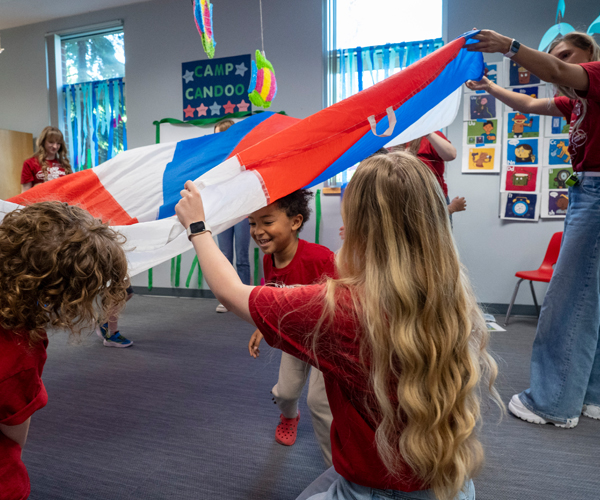
“We’re very grateful for this program. I absolutely recommend Camp Candoo to other families. It’s not just a program, it’s a partnership.”
Camp Candoo Parent, 2025
Camp Schedule
Before Camp
Each camper will be paired with a student clinician, who will develop rapport with your child prior to camp via Internet chat or pre-chat visit.
First Day of Camp (June 15)
The first day will be an assessment day. Each child will be assessed individually for a 90–120 minute block. Times determined closer to camp.
During Camp (June 16–18, 22–25)
Schedule for Days 2–7
There will be a short graduation ceremony at the end of the last day of camp.
| Time | Activity |
|---|---|
| 12:45–1:00p.m. | Arrive at clinic |
| 1:00–1:30 p.m. | Literacy group activity |
| 1:30–2:00 p.m. | Individual therapy |
| 2:00–2:30 p.m. | Snack and small group |
| 2:30–3:00 p.m. | Individual therapy |
| 3:00–3:30 p.m. | Motor group activity |
| 3:30–4:00 p.m. | Literacy group activity |
| 3:45–4:00 p.m. | Parent debrief |
Camp Candoo in The Media
References
- Strand E., Stoeckel R., Baas B. (2006). Treatment of severe childhood apraxia of speech: A treatment efficacy study. J Med Sp Lang Path. 14(4) 297-307.
- Springle, A. P., Breeden, A., et al. (2020). Speech intervention effects for childhood apraxia of speech: Quality appraisal of systematic reviews. Perspectives of the ASHA Special Interest Groups, 5(3), 646-653.
- Hume, S. B., Schwarz, I., & Hedrick, M. (2018). Preliminary investigation of the use of phonological awareness paired with production training in childhood apraxia of speech. Perspectives of the ASHA Special Interest Groups, 3(2), 38-52.
- Murray, E., McCabe, P., & Ballard, K. J. (2014). A systematic review of treatment outcomes for children with childhood apraxia of speech. American Journal of Speech-Language Pathology, 23, 486-504.