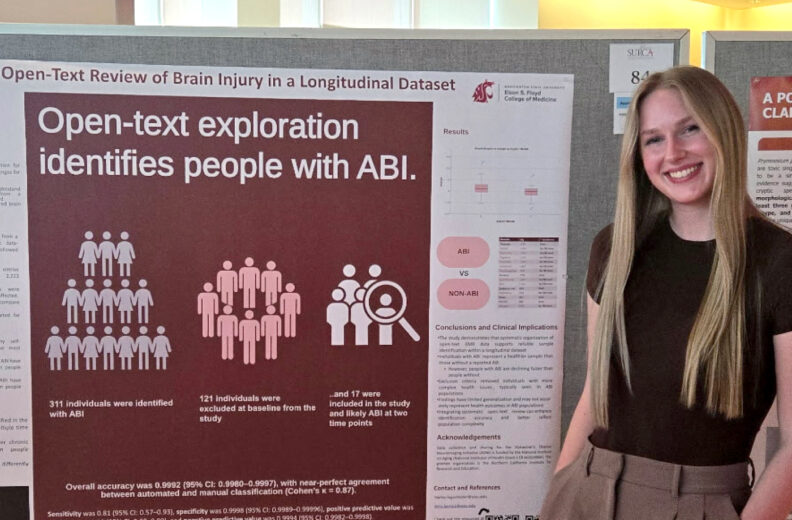
The future of speech-language pathology was on display this spring as five undergraduate students from the Elson S. Floyd College of Medicine’s Department of Speech and Hearing Sciences (SHS) presented their research at WSU’s 2026 Showcase for Undergraduate Research and Creative Activities (SURCA) in Pullman.
The annual event brought together more than 300 students from across the university to share scholarly and creative work that makes an original intellectual contribution and tackles pressing real-world challenges.
“The mentored research and creative activity presented by WSU students never ceases to amaze me—extremely high caliber—and every year I think this is perhaps the most remarkable we’ve seen yet,” WSU Assistant Vice Provost Sánchez Lanier said at the event’s awards ceremony.
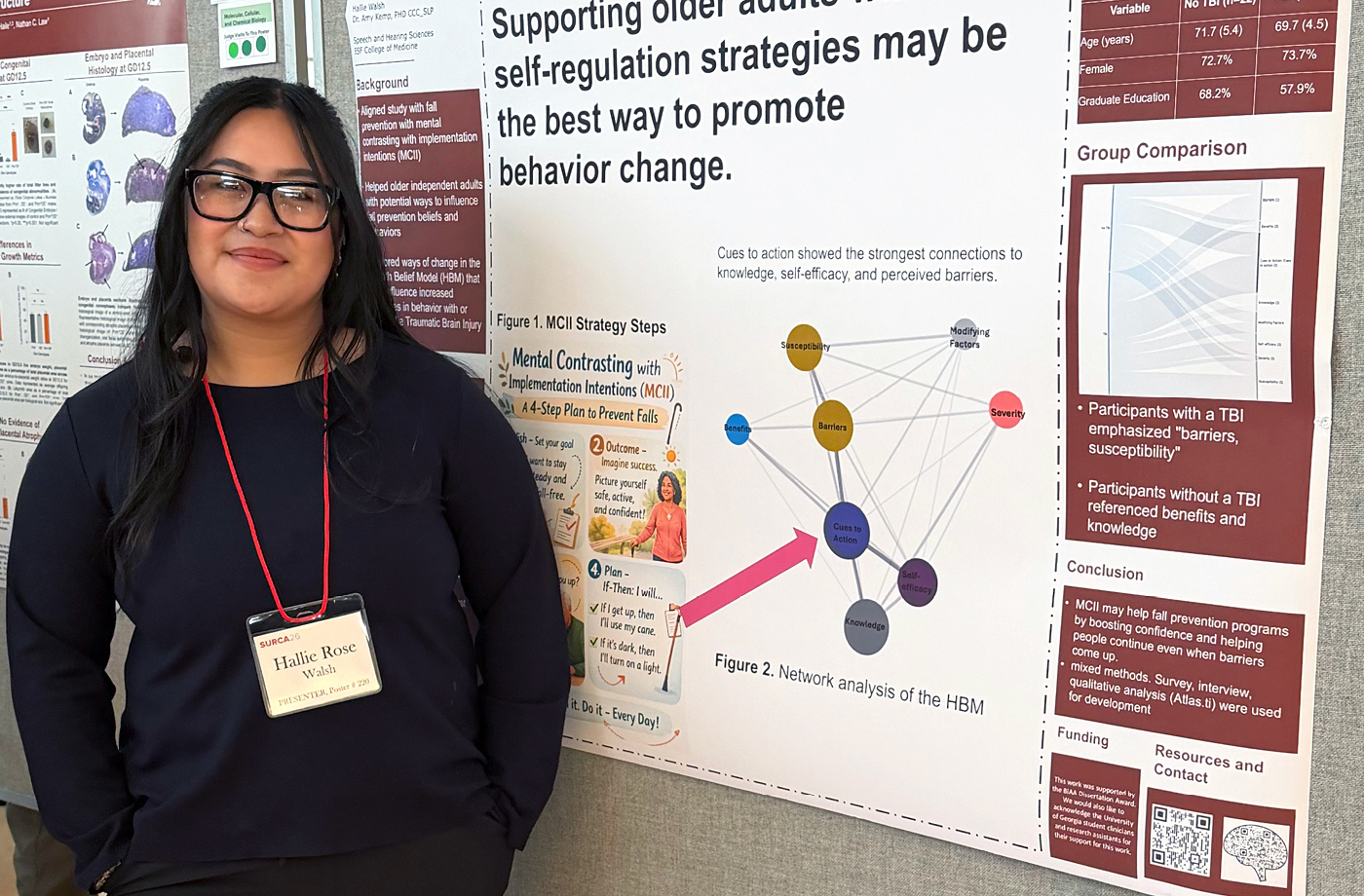
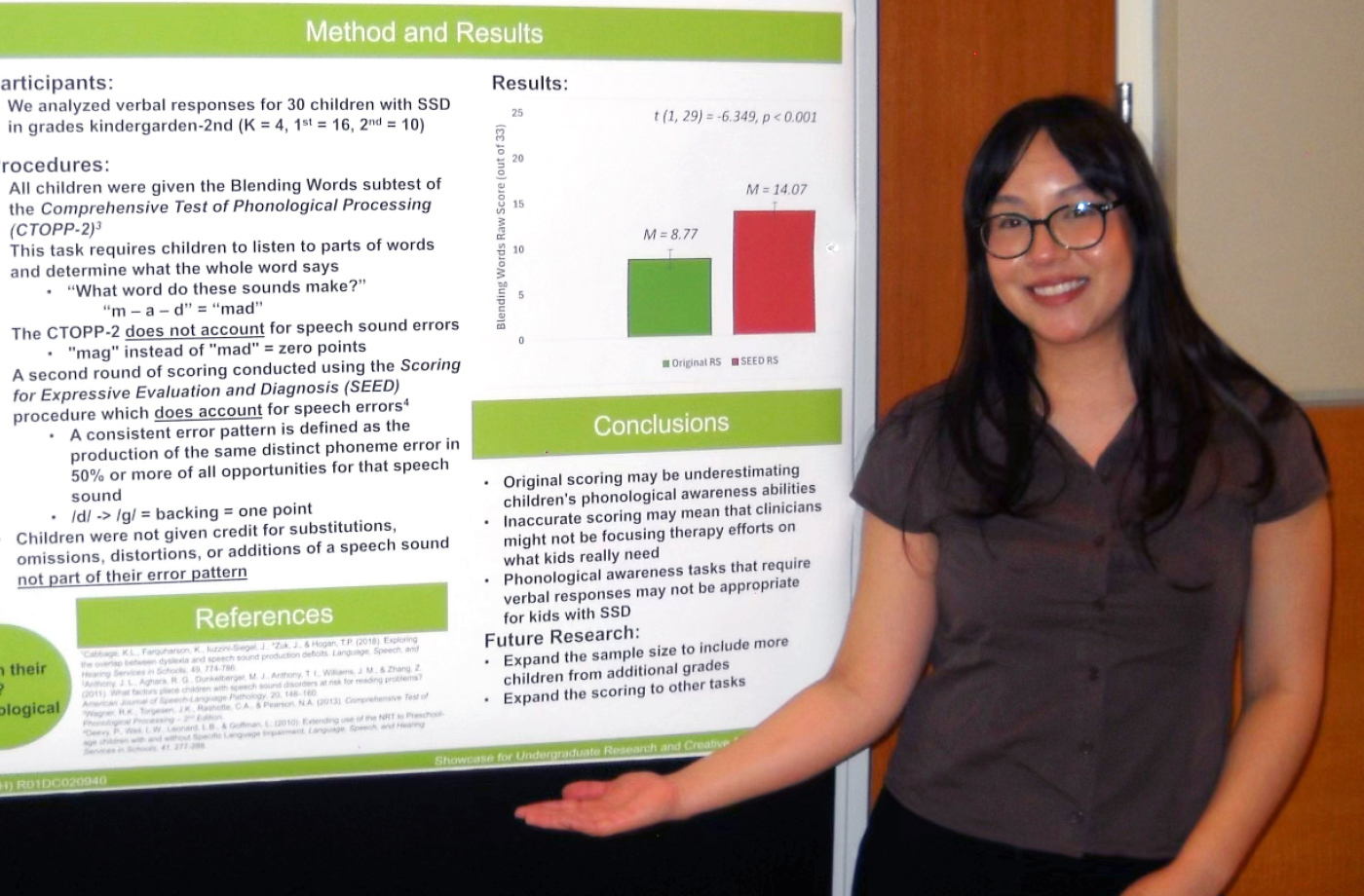
This year, senior Hailey Legenfelder was one of five undergraduate SHS students to present at SURCA. She and classmates Erin Brouwer, Emma Lo, Consuelo Munguia, and Hallie Walsh showcased research on topics ranging from hearing loss and healthy aging to childhood speech disorders and communication after traumatic brain injury. Assistant Professors Katy Cabbage, PhD, CCC-SLP, and Amy Kemp, PhD, CCC-SLP, served as faculty mentors.
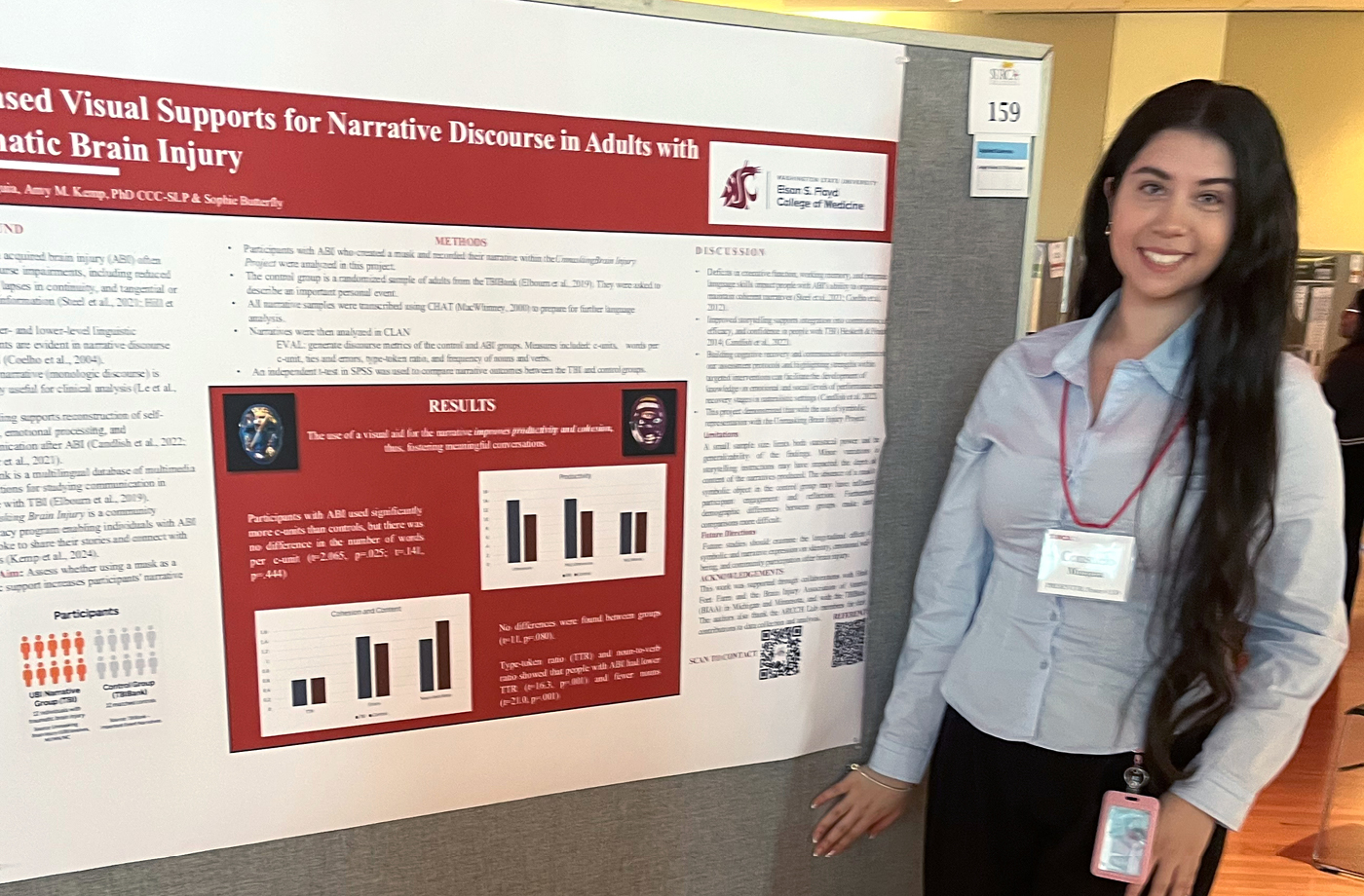
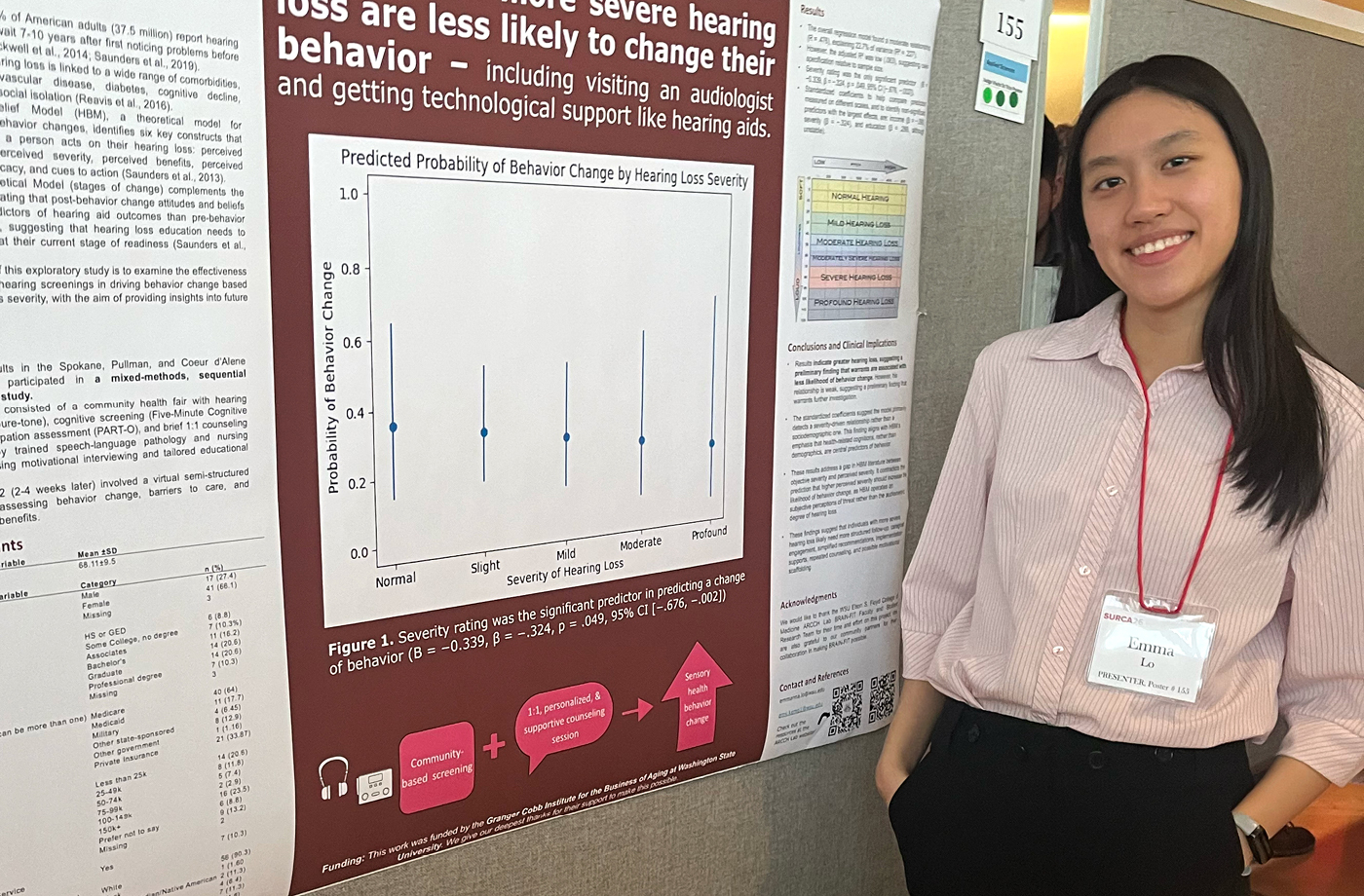
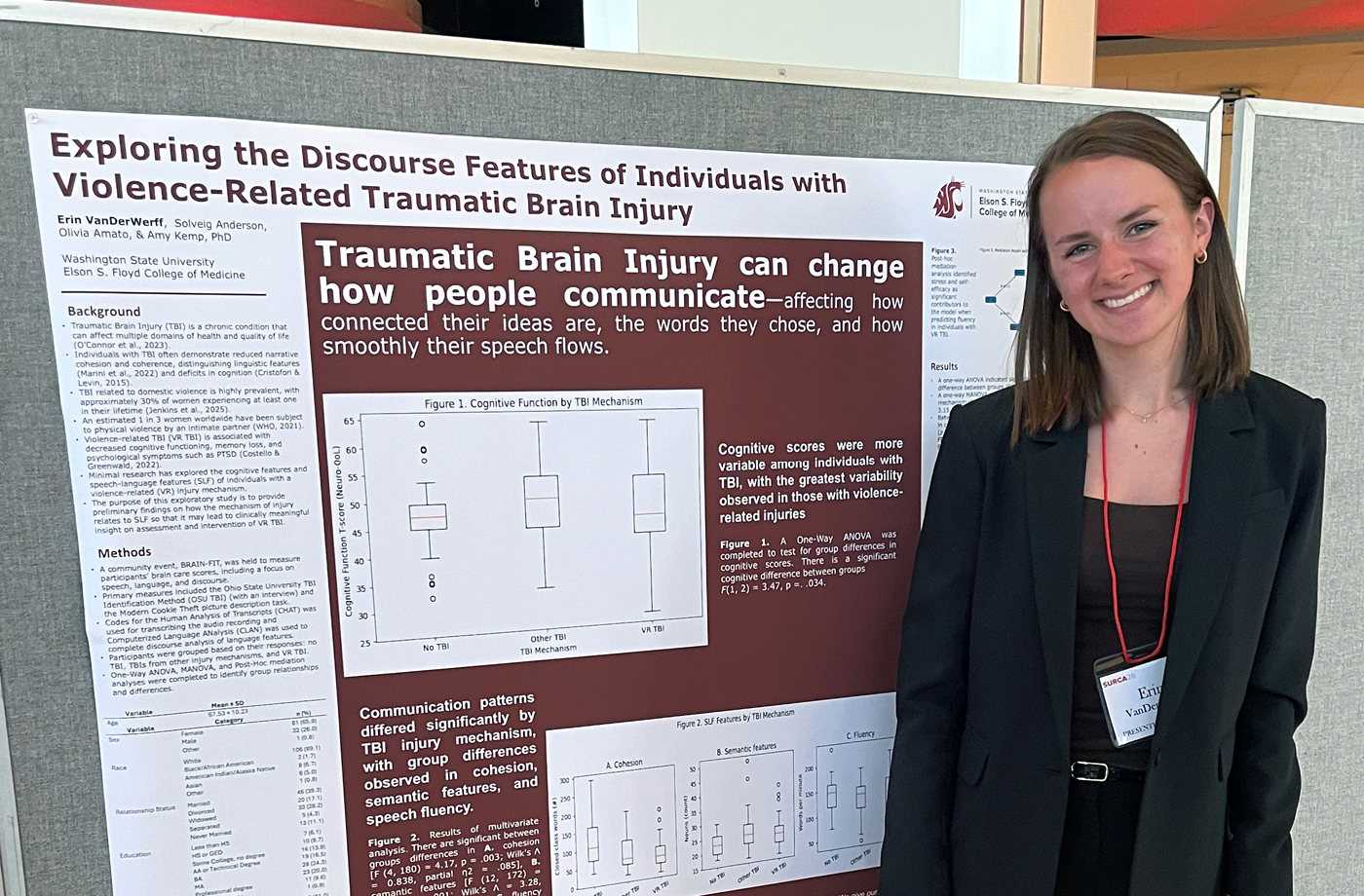
For Legenfelder, research let her apply what she learned in the classroom and make an impact through studies that can improve clinical care.
“I wanted to go beyond theoretical frameworks of disorders and treatment to see what that looks like with real people and real data,” she said. “Research gave me that opportunity.”
Legenfelder’s work in Kemp’s lab on a larger project about the long-term effects of acquired brain injury (ABI) led her develop a better way to identify individuals with ABI in large electronic medical record datasets so they can be included in future studies.
“The biggest takeaway from our study is that when research has a lot of exclusion criteria, the people included in the study may not actually reflect the real-world population,” she said. “We need to look at the whole person, both in research and clinically, so we can provide truly individualized care.”
While Legenfelder plans to pursue a career as a practicing speech-language pathologist, she feels her research experience will make her a better clinician.
“Being involved in research has taught me to think critically about where the information we’re using in practice actually comes from and how research findings apply to the people we’re working with,” she said. “Even if I’m not directly conducting research, I think having that experience will help me better understand and use research to make more informed clinical decisions.”