Highlights of the Curriculum
Training in Leadership and Business Administration for Collaborative, Complex Healthcare Systems
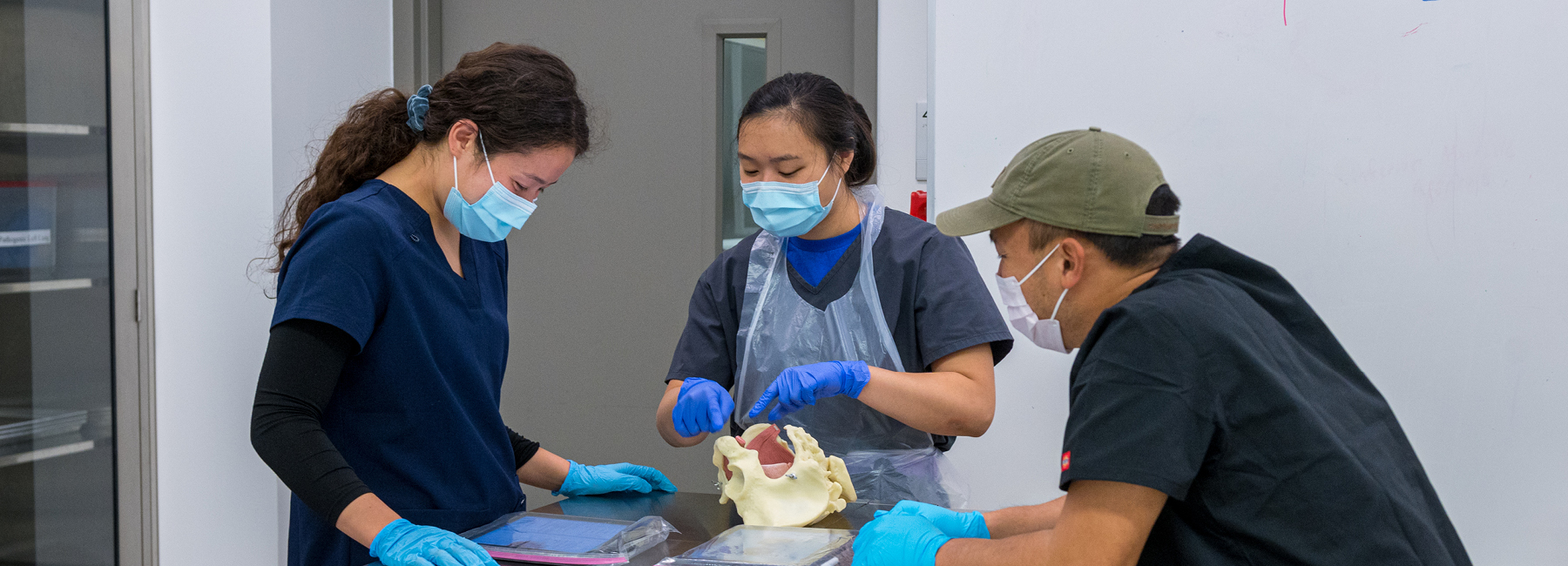
While leadership, advocacy, and business administration are not often included in medical school curricula, our curriculum integrates leadership courses into all four years of the program, culminating in a capstone project applying knowledge from course work and clinical experiences.
Leadership skills, business acumen, and an understanding of healthcare system economics are essential to your success as a physician. Physicians are often called upon to play leadership roles in their organizations and communities, such as directing a multidisciplinary healthcare team, writing a research grant proposal, or launching a free clinic to help an underserved community. These skills will equip you for success whether you aspire to run your own practice, serve as CEO of a large hospital, or practice in a community with limited healthcare infrastructure.
This Leadership Curriculum Equips Future Physicians To
- Advocate for patients and underserved communities in challenging healthcare environments
- Understand the economics of the U.S. healthcare system and insurance system in both the public and private sectors
- Navigate and mobilize multidisciplinary teams to foster a strong organizational culture and achieve high-quality outcomes for patients
- Effectively facilitate organizational transitions and respond nimbly to challenges
- Develop a professional identity and achieve timely career advancements
- Use resources efficiently and develop a strategic plan for sustainably supporting long-term operations and growth
- Evaluate and improve the effectiveness of your leadership and programs through the use of quality and safety metrics and managerial tools such as root cause analysis
- Use electronic medical record (EMR) systems to improve patient care and clinical workflow
- Students will earn a certificate in leadership in medicine and healthcare upon completion of the leadership course work and capstone project.
“Physicians are often called upon to lead teams, lead change, and advocate for marginalized patients; standard medical education does not always prepare physicians for these roles. Our curriculum has a required leadership certificate course that spans all four years of our program providing ample opportunity to practice these skills in the classroom and in the community.”
—Kimberly Beine, MD, Pre-Clerkship Co-Director
Independent Research and Interdisciplinary Scholarship Activities
Scholarship Activities
Evidence-based practice, or pairing research results with clinical expertise to make decisions about patient care, is the foundation of modern medicine. By engaging in self-directed research and scholarship activities, students gain a practical understanding of medical research and learn critical and creative thinking skills necessary for making evidence-based clinical decisions.
Scholarship and Discovery Project
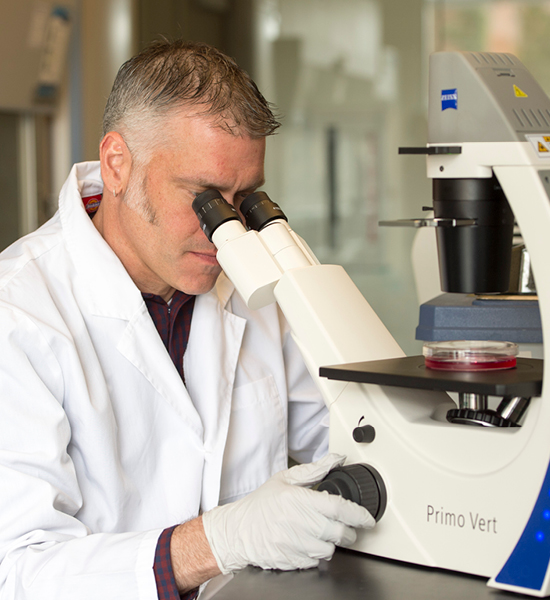
All medical students complete a scholarship project during the Foundations of Scholarship and Discovery courses, which is an opportunity to delve deeply into a topic or multiple topics that interest you. This can be a traditional research project or a creative one incorporating other disciplines, such as arts and humanities, medical education, rural health initiatives, bioengineering, leadership, etc. Working independently or as part of a multidisciplinary research team, students gain firsthand experience designing and conducting original research, including developing research questions, collecting and analyzing data, and interpreting findings. This prepares students for career research and promotes a habit of lifelong learning for all physicians.
Students are assigned a faculty advisor to guide their project’s progression and choose a supervisor with expertise in their area of interest. Our faculty conducts research on a range of topics, including addiction, autism, cancer, community health, neuroscience, sleep, and more.
Research Elective and Extracurricular Research
Students have additional opportunities to pursue research beyond the required scholarship and discovery project. These include enrolling in the research elective in Year 4 and participating in extracurricular research at any time during the program.
Opportunities to Present and Publish Research
The college encourages students to share findings from their scholarship and discovery projects or other research activities with like-minded scholars and to further their professional development by presenting their work at regional, statewide, or national conferences and publishing in academic journals. Advisors and other mentors can offer guidance on this process.
Research Funding
There are a variety of funding sources for research, both at WSU and from external sources. The college identifies opportunities for extramural grant funding for student research and publicizes information such as grant criteria and application deadlines. Additionally, the college has intramural funds to help with eligible student research expenses, such as costs associated with conference travel.
Embracing Innovation in Technology for Improved Medical Education and Practice
Technological advances are continually transforming medical education and practice. Advances in technologies for delivering healthcare services offer particular opportunities for physicians serving rural and underserved communities, allowing them to bridge the distance and close gaps in access to healthcare. Our curriculum gives students hands-on experience with the latest technologies so they can employ them confidently as practicing physicians.
“We refine and improve our curriculum regularly to keep up with our rapidly changing world. For example, we prioritize addressing health justice issues and considering advances in technology, like artificial intelligence.”
—Kimberly Beine, MD, Pre-Clerkship Co-Director
Leveraging Digital Resources in the Classroom
The College of Medicine’s dedication to accessibility and equity is represented in our all-digital curriculum, which means that all learning resources are provided in a digital format, from textbooks, classroom handouts, exams, and assessments to other online learning applications, like Osmosis, AMBOSS, and Complete Anatomy. Access to these resources is provided at no cost to students.
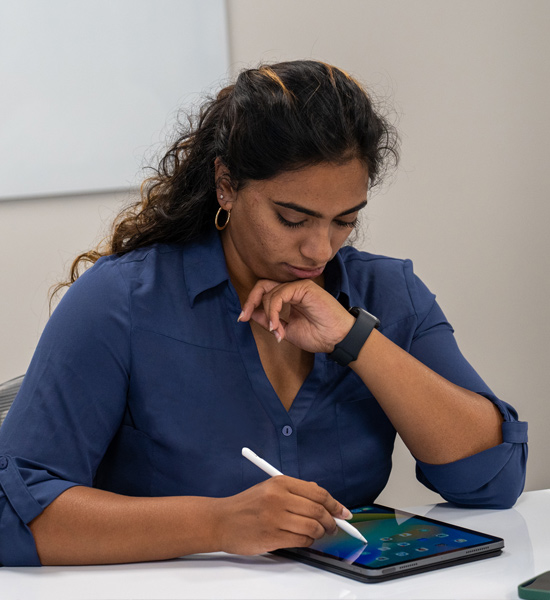
The College of Medicine’s iPad initiative equips all incoming medical students with a 10.9-inch iPad, Apple Pencil, and keyboard case and trackpad to provide equitable access to digital medical education content and to allow students to bring materials on the go, from the classroom to community-based clinical settings.
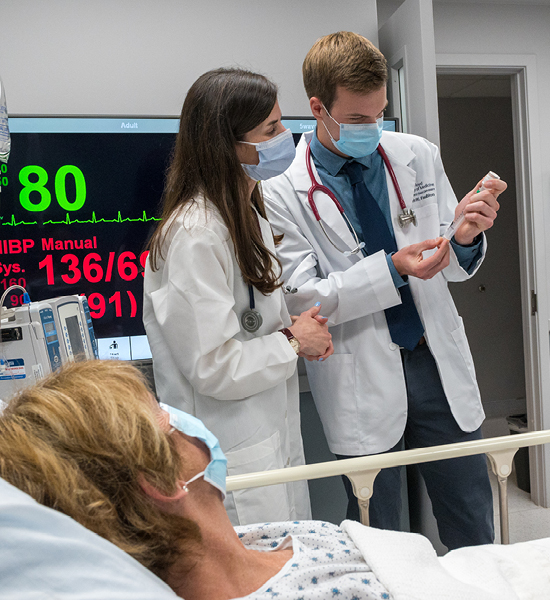
Additionally, the Virtual Clinical Center hosts college facilities for simulation-based training, including 10 clinical exam rooms, two high-fidelity simulation suites, a classroom for skills-based instruction, and a conference room to support video debriefing. The center is equipped for several simulation modalities, including standardized patients, manikin-based simulation, task trainer-based simulation, and computerized simulation.