Master of Science in Nutrition and Exercise Physiology
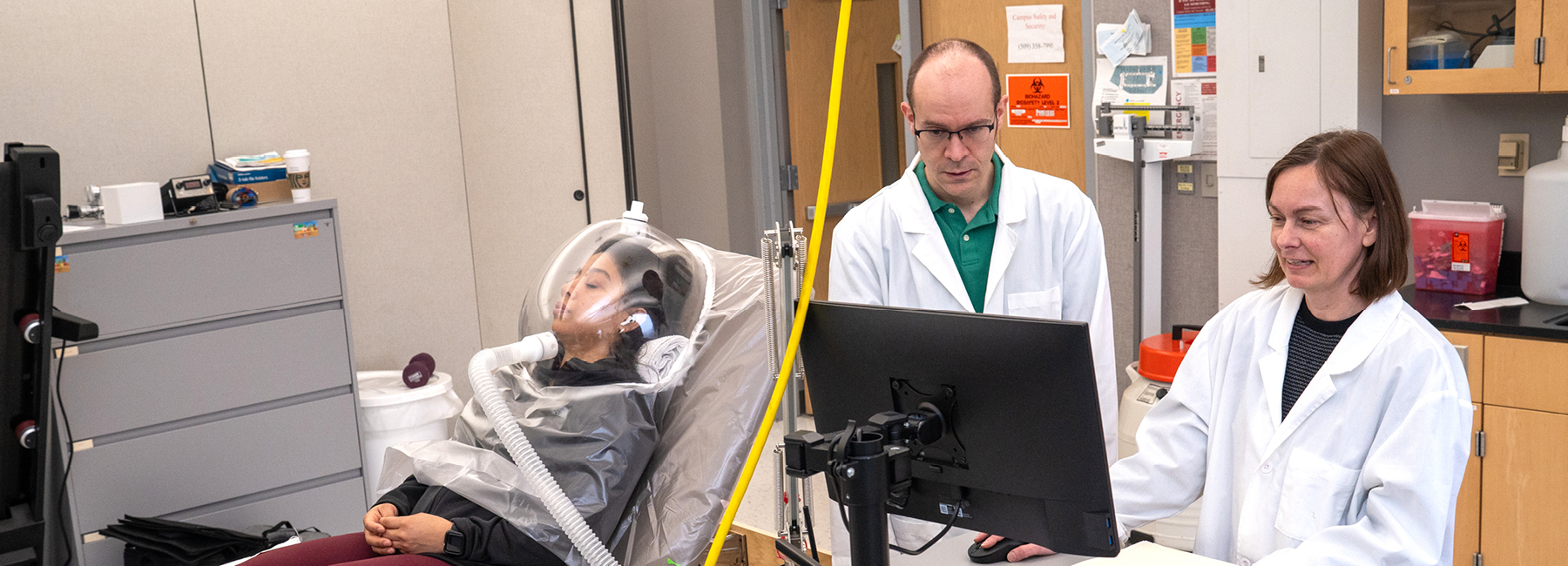
The Master of Science in Nutrition and Exercise Physiology (MS NEP) degree offers students of all undergraduate disciplines a pathway into nutrition and exercise physiology education and research. The program provides students with advanced preparation and training for doctoral studies in basic and applied sciences, professional degrees, and careers in the healthcare industry, public health agencies, non-profits, and academia. In this two-year program, students work closely with a faculty member as they conduct a research project and prepare a thesis on a research topic related to human nutrition and/or exercise physiology.
Now Accepting Applications
Application deadline: January 31
Learn from Experts
Learn and work alongside experts in their field who serve as your faculty mentors in the MS program.
PhD NEP Faculty Advisors
- Glen Duncan, PhD, ACSM-CEP
- Pablo Monsivais, PhD, MPH
- Ofer Amram, PhD
- Hans Haverkamp, PhD
- Martine Perrigue, PhD, RDN, CD
- Franck Carbonero, PhD
- Patrick Solverson, PhD
- Catherine Jarrett, PhD, RDN
Research Teams
- Washington State Twin Registry
- Food Lab
- Nutrition and Gut Microbiome Lab
- Community Health and Spatial Epidemiology (CHaSE) Lab
Research Areas
Our faculty explore health promotion and disease prevention in clinical, community, and population-level settings. Areas of inquiry include:
- Effects of genetics and built and social environments on health using twin studies
- Social and behavioral determinants of diet, weight, and chronic disease
- Spatial epidemiology and relationships among space, place, and health outcomes
- Connections between nutrition and the gut microbiome
- Cardiovascular and cerebrovascular health with aging and disease
- Pulmonary system responses to exercise, aging, and disease
- Mechanistic links between lifestyle and environmental factors and obesity, diabetes, and cardiovascular disease
- Health policy and the economics of healthy eating
Contact Program Director Pablo Monsivais, PhD, MPH, with questions about the MS NEP program and to discuss your research interests.
Degree Requirements
The MS NEP degree generally requires four semesters and potentially a few additional terms based on individual student research projects.
Upon enrollment, students select one of three program tracks: human nutrition, exercise physiology, or a combined track.
Students complete a minimum of 30 credits, including a two-semester graduate seminar series and a set of chosen electives.
Schedule
Resources
Cost & Financial Info
Tuition and Fees
Financial Aid
Scholarships & Assistance
Spokane Housing
Establishing WA Residency