Curriculum
Broad Clinical Experiences
We strive to support the varied career goals of our residents while living our mission to improve the health of the communities we serve. Our program curriculum places a strong emphasis on academic excellence throughout the training experience, offering a learning environment that balances learners’ personal and professional needs. Residents divide their time between general medicine and subspecialty ward services, intensive care units, ambulatory care experiences, consultation rotations, emergency rooms, and long-term care settings to gain a breadth and depth of hands-on experience.
We believe in the importance of truly protected learning time. Clinical duties are suspended for all residents every Wednesday afternoon for Academic Half-Day (AHD). AHD content balances board-centric, core internal medicine content plus classroom elements necessary for success as well-rounded internal medicine physician including but not limited to medical economics, quality improvement (QI), point-of-care ultrasound (POCUS) workshops, and code blue simulations.
Residents also enjoy attempting to stump their attendings during a twice-weekly interactive, case-based conference. Regularly scheduled high-yield, highly curated Grand Rounds, and Morbidity and Mortality talks pepper the conference schedule throughout the year.
In addition to the class-wide curriculum, residents experience a robust, protected outpatient curriculum. Residents attend Ambulatory Conference on the morning of their continuity clinic and have protected time Wednesday mornings while on their Ambulatory rotation for the Ambulatory Medicine Experiential (AMEx) Curriculum—experiential learning sessions on core outpatient topics like diabetes medication management and supplies, outpatient paracentesis and joint injection training, IUD/Nexplanon insertion and removal, and medication assisted treatment for opioid use disorder. Residents also have recurring sessions during AMEx for Panel Management, and clinic-based QI.
Serving our community in Everett in the clinic is enhanced by getting to know the community and improving access to care outside our clinic walls. Throughout the year, residents have the opportunity to participate in community service events with local service partners and to practice medicine in non-traditional settings to reach people who cannot easily access our clinics. These opportunities include working with a free mobile clinic serving people who are uninsured and medical outreach to our neighbors experiencing homelessness.
To equip physicians with the necessary skills to improve access to care in our state’s rural and underserved communities, we incorporate health equity and advocacy training into all three years of the curriculum. Our residents learn how to be a voice for their patients, leaders in their local communities, and public experts for healthcare infrastructure and access. Our curriculum covers a wide array of topics. As a result, our graduates approach patients and communities with perspective taking and curiosity, assure that historical challenges are accounted for in whole person care, and partner with communities and legislators to enact change for healthier communities.
*We define health equity as the assurance of conditions for optimal health for all people. We pursue this work in service of all communities and all peoples of Washington.
New starting the 2026–2027 academic year! Residents will be able to join a 2-year Primary Care Track. Interns dedicated to pursuing a career in primary care can apply for this track. In addition to their ambulatory blocks at Providence or the VA, Primary Care Track PGY2s and PGY3s will have approximately 6 weeks each year of community-based primary care and ambulatory subspecialty rotations to gain broad exposure to the unique models of primary care practice and patient populations in Washington State. Primary Care Track residents will also take part in track-specific structured learning series that will better prepare them for successful careers as primary care doctors.
Started in 2024, the WSU IMRP-Everett Medical Education Track is a 2-year longitudinal curriculum aimed to help residents develop skills as clinical teachers and pursue possible careers in academic medicine. Residents apply to the track at the end of intern year and start track activities as PGY2s. Track activities include a mixture of interactive workshops and didactics on education theory and skills, observed teaching with feedback across a spectrum of clinical and classroom settings, as well as a mentored medical education capstone project. Residents who complete required track activities receive a Med Ed Track certificate at graduation. Additional details about the track can be found in the presentation. The Medical Education Track is directed by Dr. Yihan Yang.
Point Of Care Ultrasound
It’s not often that technology advancements bring us back to the bedside, rather than away from it. Primarily used in emergency medicine and intensive care, Point of Care Ultrasound (POCUS) has now transitioned to the medicine world at a rapid pace. The development of new ultrasound technologies, combined with artificial intelligence software implementation and mounting research showing POCUS is within the scope of practice of internists, has made POCUS an important skillset to master for future inpatient and outpatient internal medicine providers.
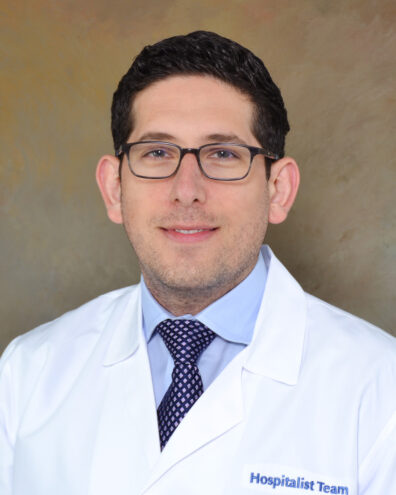
“Point of Care Ultrasound empowers the clinician that knows the patient best to efficiently and reliably get clinical information at the bedside, aiding in clinical decision while also improving patient-physician relationship.”
Federico Fenton Portillo, MD
POCUS Director
Quality Improvement and Patient Safety
As systems become more complex, pressure to address efficiency issues throughout our healthcare environment is increasing. As frontline healthcare professionals, residents have unique opportunities to contribute to quality improvement and patient safety initiatives at the clinical sites where they rotate. Through formal didactics, group projects and QI and PS committees, WSU internal medicine residents have many ways to contribute to the evolving quality landscape at Providence Medical Center and WSU.
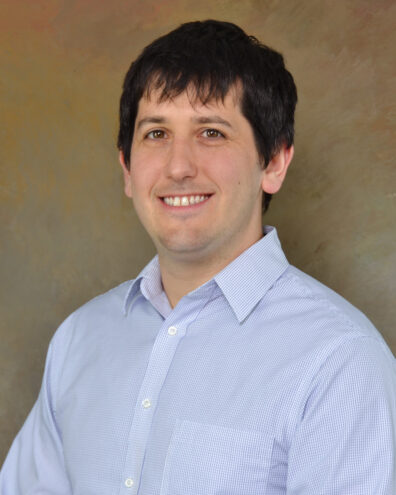
“Understanding the system you are working within is essential to maximizing your performance as a physician and to helping your patient’s navigate an increasingly complex care environment”
Alexander Katz, MD
Director of Quality Improvement and Patient Safety, Inpatient
During Women’s Health Clinic, residents will spend a half day on ambulatory block at the main WSU primary care clinic with Dr. Tess King, seeing patients for pap smears, contraception procedures, and other women’s health specific visits.
X+Y Scheduling Model
Starting in the 2026–2027 academic year, our program will be moving to a 4+2+2 rotation schedule model. We will be the only internal medicine residency program in Western WA to offer training using an X+Y system. This change was made in response to resident feedback and co-design. The goals of moving to the 4+2+2 system are to improve continuity of care for both inpatient and ambulatory rotations and enhance work-life balance for residents.
In a 4+2+2 system, residents can expect to consistently be on a two-week ambulatory block every 6 weeks. Two-week ambulatory blocks are separated by a four-week inpatient rotation and a two-week elective.
| Intern | Block 1, Week 1 | Block 1, Week 2 | Block 1, Week 3 | Block 1, Week 4 | Block 2, Week 1 | Block 2, Week 2 | Block 2, Week 3 | Block 2, Week 4 | Block 3, Week 1 | Block 3, Week 2 | Block 3, Week 3 | Block 3, Week 4 | Block 4, Week 1 | Block 4, Week 2 | Block 4, Week 3 | Block 4, Week 4 | Block 5, Week 1 | Block 5, Week 2 | Block 5, Week 3 | Block 5, Week 4 | Block 6, Week 1 | Block 6, Week 2 | Block 6, Week 3 | Block 6, Week 4 |
|---|---|---|---|---|---|---|---|---|---|---|---|---|---|---|---|---|---|---|---|---|---|---|---|---|
| 1 | MICU | MICU | MICU | MICU | Night Med | Night Med | Ambi | Ambi | WARDS | WARDS | WARDS | WARDS | Backup | Backup | Ambi | Ambi | WARDS | WARDS | WARDS | WARDS | Night Med | Night Med | Ambi | Ambi |
| 2 | MICU | MICU | MICU | MICU | Night Med | Night Med | Ambi | Ambi | WARDS | WARDS | WARDS | WARDS | Backup | Backup | Ambi | Ambi | WARDS | WARDS | WARDS | WARDS | Night Med | Night Med | Ambi | Ambi |
| 3 | WARDS | WARDS | WARDS | WARDS | Backup | Backup | Ambi | Ambi | MICU | MICU | MICU | MICU | Night Med | Night Med | Ambi | Ambi | WARDS | WARDS | WARDS | WARDS | Backup | Backup | Ambi | Ambi |
| 4 | WARDS | WARDS | WARDS | WARDS | Backup | Backup | Ambi | Ambi | MICU | MICU | MICU | MICU | Night Med | Night Med | Ambi | Ambi | WARDS | WARDS | WARDS | WARDS | Backup | Backup | Ambi | Ambi |
| 5 | WARDS | WARDS | WARDS | WARDS | Ambi | Ambi | Night Med | Night Med | WARDS | WARDS | WARDS | WARDS | Ambi | Ambi | Backup | Backup | MICU | MICU | MICU | MICU | Ambi | Ambi | Night Med | Night Med |
| 6 | WARDS | WARDS | WARDS | WARDS | Ambi | Ambi | Night Med | Night Med | WARDS | WARDS | WARDS | WARDS | Ambi | Ambi | Elective | Elective | MICU | MICU | MICU | MICU | Ambi | Ambi | Backup | Backup |
| 7 | WARDS | WARDS | WARDS | WARDS | Ambi | Ambi | Backup | Backup | WARDS | WARDS | WARDS | WARDS | Ambi | Ambi | Night Med | Night Med | WARDS | WARDS | WARDS | WARDS | Ambi | Ambi | Backup | Backup |
| 8 | WARDS | WARDS | WARDS | WARDS | Ambi | Ambi | Backup | Backup | WARDS | WARDS | WARDS | WARDS | Ambi | Ambi | Night Med | Night Med | WARDS | WARDS | WARDS | WARDS | Ambi | Ambi | Elective | Elective |
| 9 | WARDS | WARDS | WARDS | WARDS | Ambi | Ambi | Elective | Elective | WARDS | WARDS | WARDS | WARDS | Ambi | Ambi | Backup | Backup | WARDS | WARDS | WARDS | WARDS | Ambi | Ambi | Night Med | Night Med |
| 10 | Night Med | Night Med | Ambi | Ambi | MICU | MICU | MICU | MICU | Backup | Backup | Ambi | Ambi | WARDS | WARDS | WARDS | WARDS | Night Med | Night Med | Ambi | Ambi | WARDS | WARDS | WARDS | WARDS |
| 11 | Night Med | Night Med | Ambi | Ambi | MICU | MICU | MICU | MICU | Elective | Elective | Ambi | Ambi | WARDS | WARDS | WARDS | WARDS | Backup | Backup | Ambi | Ambi | WARDS | WARDS | WARDS | WARDS |
| 12 | Backup | Backup | Ambi | Ambi | WARDS | WARDS | WARDS | WARDS | Night Med | Night Med | Ambi | Ambi | MICU | MICU | MICU | MICU | Backup | Backup | Ambi | Ambi | WARDS | WARDS | WARDS | WARDS |
| 13 | Backup | Backup | Ambi | Ambi | WARDS | WARDS | WARDS | WARDS | Night Med | Night Med | Ambi | Ambi | MICU | MICU | MICU | MICU | Elective | Elective | Ambi | Ambi | WARDS | WARDS | WARDS | WARDS |
| 14 | Elective | Elective | Ambi | Ambi | WARDS | WARDS | WARDS | WARDS | Backup | Backup | Ambi | Ambi | WARDS | WARDS | WARDS | WARDS | Night Med | Night Med | Ambi | Ambi | MICU | MICU | MICU | MICU |
| 15 | Ambi | Ambi | Night Med | Night Med | WARDS | WARDS | WARDS | WARDS | Ambi | Ambi | Backup | Backup | WARDS | WARDS | WARDS | WARDS | Ambi | Ambi | Night Med | Night Med | MICU | MICU | MICU | MICU |
| 16 | Ambi | Ambi | Night Med | Night Med | WARDS | WARDS | WARDS | WARDS | Ambi | Ambi | Backup | Backup | WARDS | WARDS | WARDS | WARDS | Ambi | Ambi | Night Med | Night Med | WARDS | WARDS | WARDS | WARDS |
| 17 | Ambi | Ambi | Backup | Backup | WARDS | WARDS | WARDS | WARDS | Ambi | Ambi | Night Med | Night Med | WARDS | WARDS | WARDS | WARDS | Ambi | Ambi | Backup | Backup | WARDS | WARDS | WARDS | WARDS |
| 18 | Ambi | Ambi | Backup | Backup | WARDS | WARDS | WARDS | WARDS | Ambi | Ambi | Night Med | Night Med | WARDS | WARDS | WARDS | WARDS | Ambi | Ambi | Backup | Backup | WARDS | WARDS | WARDS | WARDS |
Year 1
The first year of residency is focused on training in the fundamentals of internal medicine.
First-year residents are exposed to a diverse population of patients with a broad mix of complex disease. Interns will rotate through general inpatient wards, sub-specialty selectives, night medicine, the intensive care unit, and ambulatory medicine. Residents will also spend two weeks on the patient centered care team (PCT) working in a value-based care system. Patient volumes and teams are structured to provide adequate support with an emphasis on learning. Call schedules vary from rotation to rotation but in general we use a drip or shift work model for admissions. We have a night medicine rotation in place to cover general inpatient medicine teams. The outpatient experience includes a longitudinal continuity clinic and two to three ambulatory blocks to initiate interns in ambulatory medicine. Four weeks of vacation are given during ambulatory medicine and subspecialty selectives.
Sample Resident Schedule, Year 1
| BLOCK | ROTATIONS |
|---|---|
| 1 | Night Medicine/PCT |
| 2 | Ambulatory Medicine/Subspeciality |
| 3 | Ambulatory Medicine/Vacation |
| 4 | Inpatient Wards |
| 5 | Subspecialty Selective/Vacation |
| 6 | Inpatient Wards |
| 7 | Subspecialty Selective/Vacation |
| 8 | Inpatient Wards |
| 9 | MICU |
| 10 | Inpatient Wards |
| 11 | Ambulatory Medicine/Vacation |
| 12 | Night Medicine |
| 13 | Inpatient Wards |
Years 2 and 3
During the second and third years of residency, each trainee assumes the responsibility of functioning as the supervising physician on the general medicine, subspecialty and ICU rotations.
During the second and third years of residency, there is a greater emphasis on outpatient medicine with increased rotations in ambulatory medicine, PCT, and subspecialty rotations including Neurology, Geriatrics and Emergency medicine. In addition, residents will spend four weeks rotating in a rural community of Western Washington with experiences in both inpatient and outpatient medicine. Four weeks of vacation are given during the second and third year.
Sample Resident Schedule, Year 2
| BLOCK | ROTATIONS |
|---|---|
| 1 | Inpatient Wards |
| 2 | Ambulatory Medicine/Vacation |
| 3 | Inpatient Wards |
| 4 | MICU |
| 5 | Inpatient Wards |
| 6 | Night Medicine/Vacation |
| 7 | Rural Medicine |
| 8 | Subspecialty Selective/Vacation |
| 9 | Emergency Medicine |
| 10 | Geriatrics |
| 11 | Neurology |
| 12 | PCT (Patient Centered Care Team) |
| 13 | Elective/Vacation |
Sample Resident Schedule, Year 3
| BLOCK | ROTATIONS |
|---|---|
| 1 | PCT |
| 2 | Ambulatory Medicine |
| 3 | Elective/Vacation |
| 4 | Subspecialty Selective |
| 5 | Night Medicine |
| 6 | Rural Medicine |
| 7 | Inpatient Wards |
| 8 | Elective/Vacation |
| 9 | Inpatient Wards |
| 10 | MICU |
| 11 | Subspecialty Selective/Vacation |
| 12 | Inpatient Wards |
| 13 | Subspecialty Selective/Vacation |